
About 14,000 years
At Oberkassel, two people were buried with artworks and an early domestic dog.
Explore this page ↗
Why are graves located where they are? Who carries responsibility for farewell? What remains recognisable? Follow concrete examples from early burial to urban cemeteries and questions about their future.
Synthetic concept image, not a documentary image.
Journey
The stops follow three changes: how burial places are built, how responsibilities shift and how new processes organise farewell. Examples come from different regions and do not form a continuous development.
The overview is not to scale. Dates refer to the regions described. Future stops are explicitly speculative.
Another way of seeing
An ancient find, a recurring practice and new technical infrastructure: each trace tells a different story.
At Oberkassel, two people were buried with artworks and an early domestic dog.
Explore this page ↗Cremation is documented in central Germany as early as the Late Bronze Age.
Explore this page ↗Germany’s first crematorium introduced a new technical and organisational form of cremation.
Explore this page ↗Topics
A funeral connects body, ceremony, burial location and later remembrance. The chapters explain these layers and the roles of landscape, religion, money and responsibility.
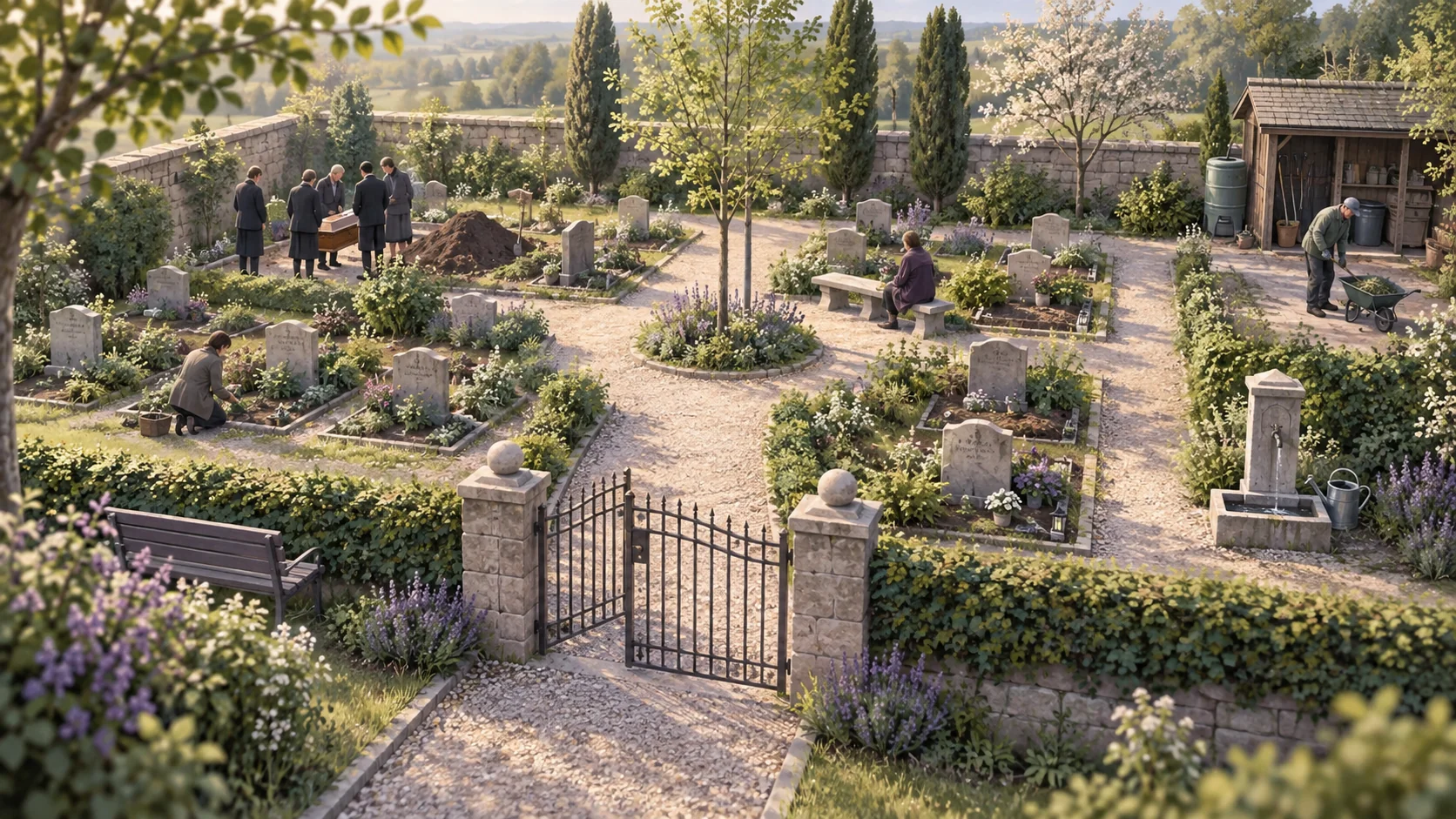
A cemetery connects three tasks: burying the dead, making room for grief and maintaining a place over time. Its form reflects how a society organises those tasks.
Explore this page ↗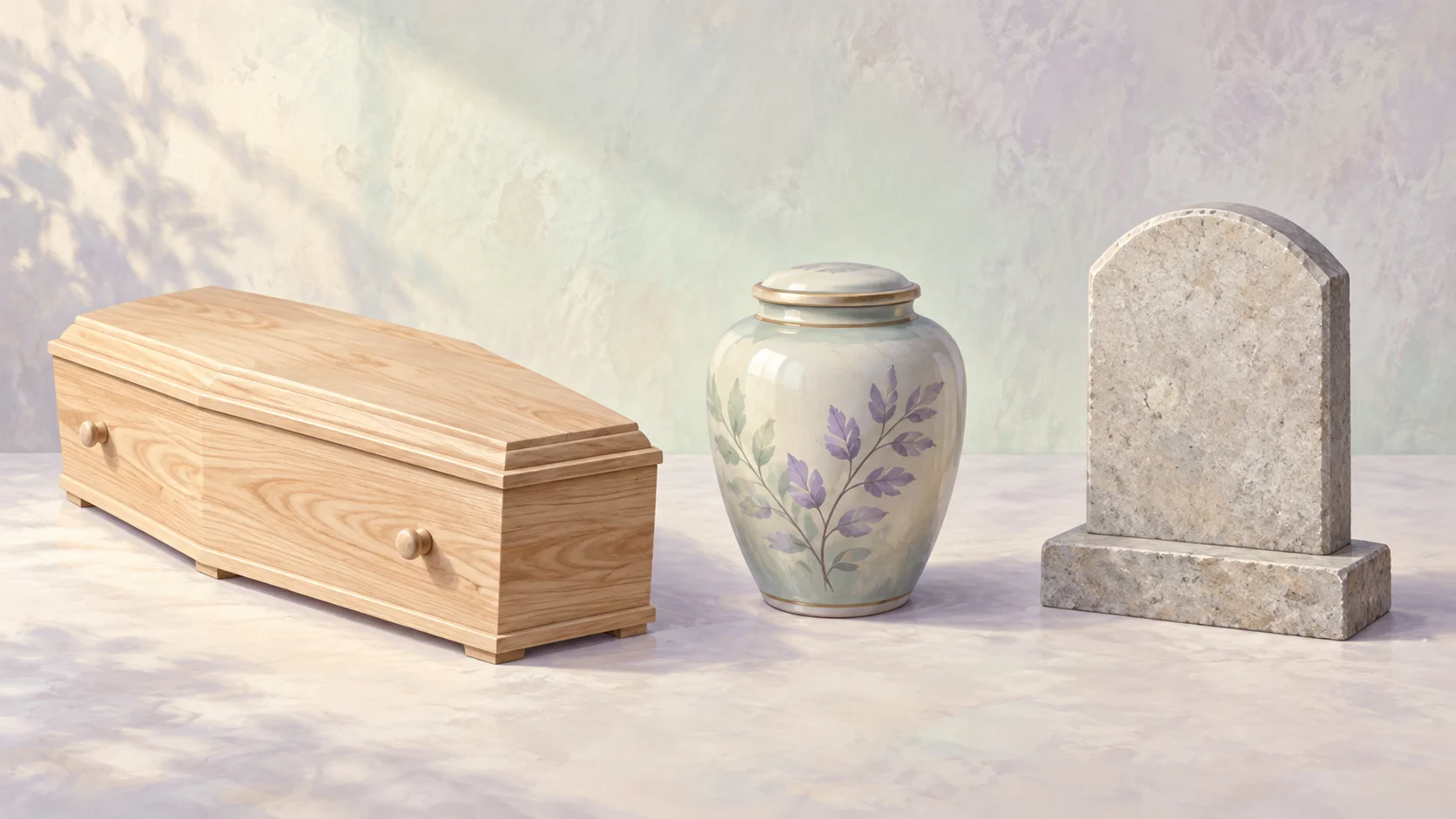
Body or ashes, ceremony or burial, individual grave or shared place: separating these decisions makes different forms of burial understandable.
Explore this page ↗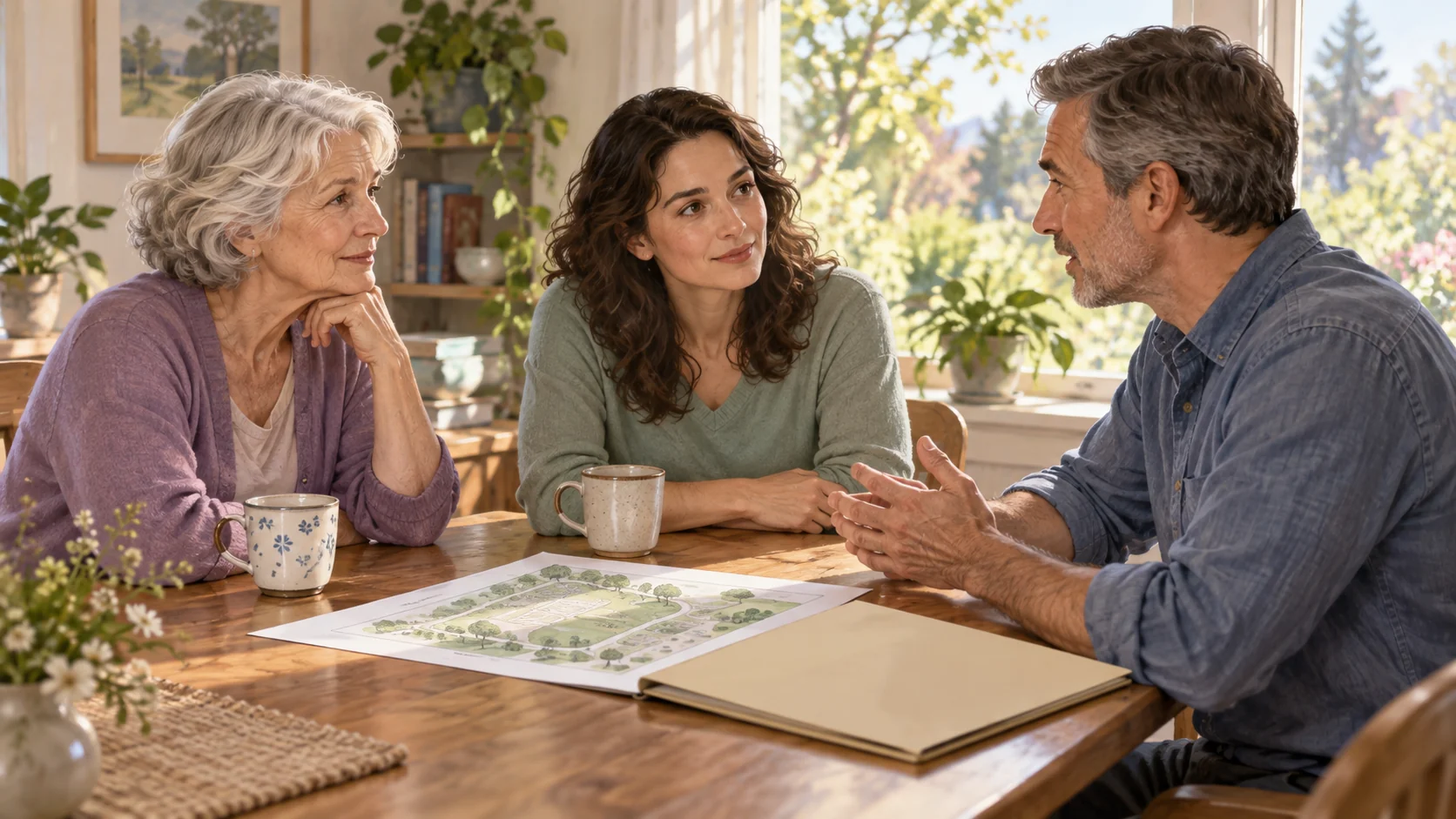
A farewell brings together people with different responsibilities. The ability to decide, pay, attend and provide later care shapes a funeral alongside personal beliefs.
Explore this page ↗Scenario · conditional inference
2050 considers care and land planning, 2100 accessibility under changing climate conditions, and 3026 understandable transmission. Each horizon begins with evidence and compares explicitly conditional possibilities.
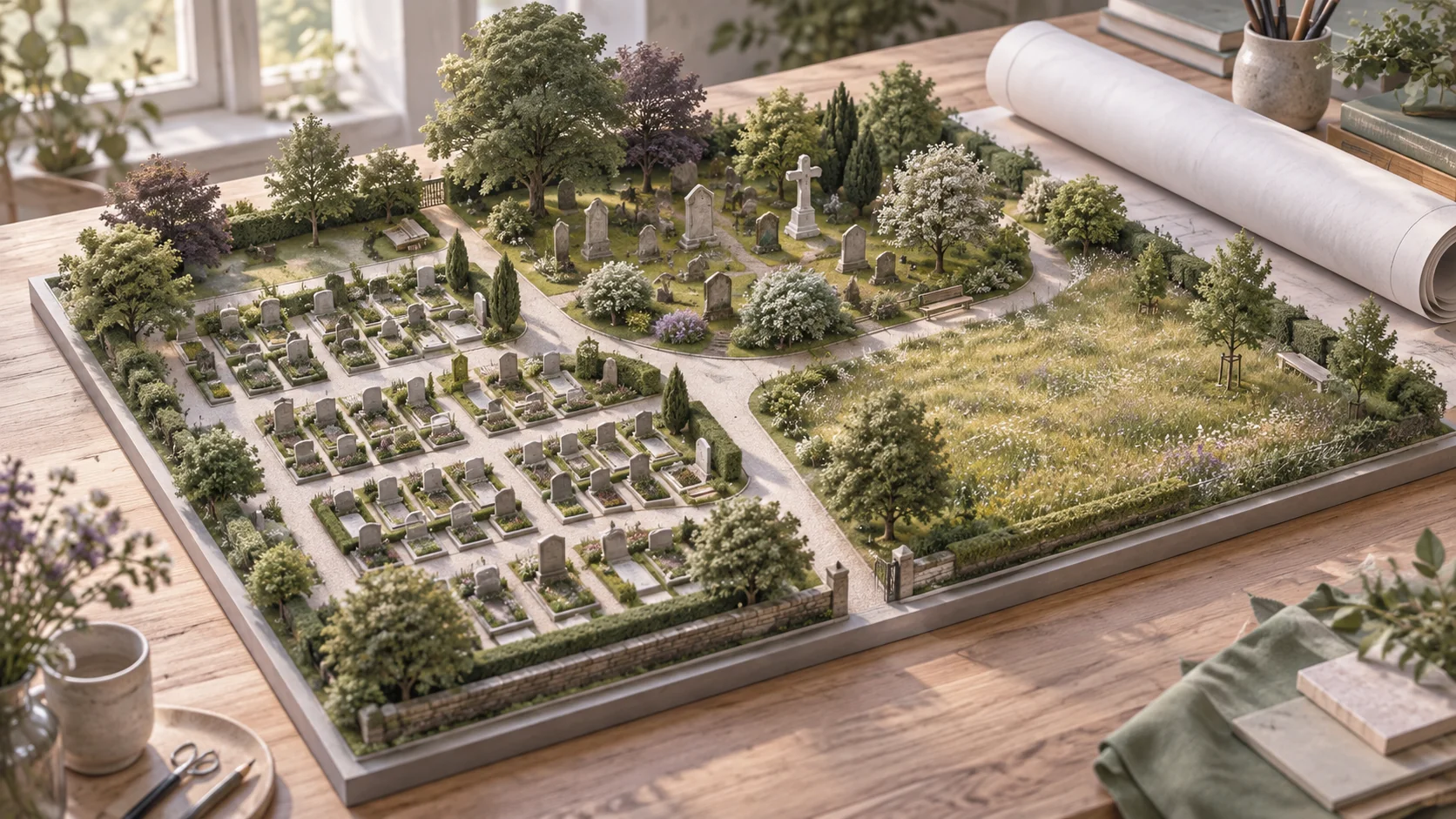
Smaller burial plots do not automatically make a large cemetery easier to operate. By 2050, the central task could be planning interment, care and new uses together.
Explore this page ↗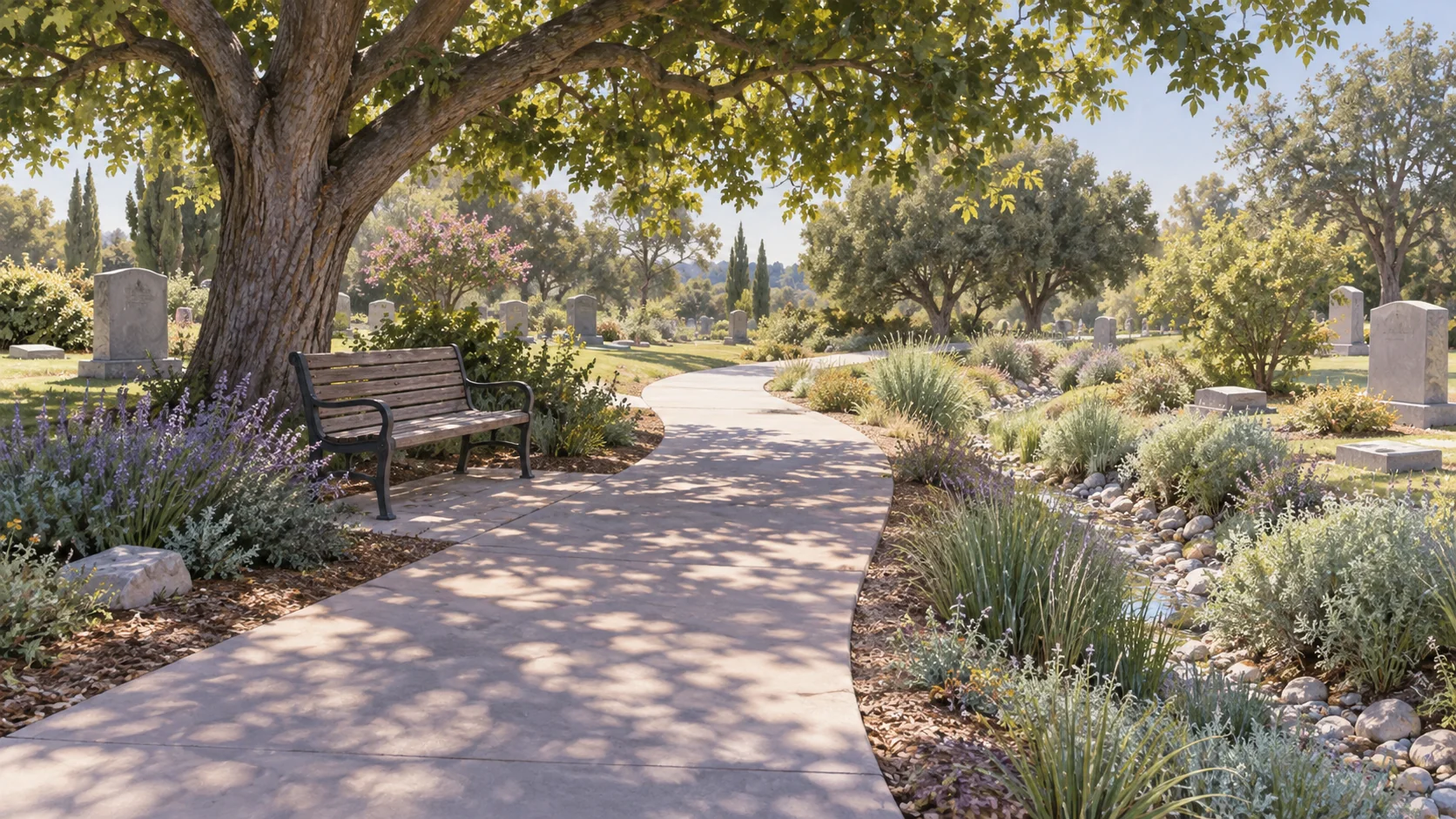
A place of remembrance needs to remain reachable when heat, drought or heavy rain make visits harder. The 2100 horizon makes adaptation a question of participation.
Explore this page ↗
A stone may survive a thousand years while its name becomes unreadable. A copied file may remain while its context is lost. Persistence and remembrance are different things.
Explore this page ↗A question to carry with you
How does the way people live change their relationship with the dead?
No. It connects selected regional examples with thematic pages. Other traditions, places and developments may differ.
Historical pages identify context and sources. Future pages distinguish evidence from conditional implications.