
Grave types: forms that change
From mounds and stone chambers to individual plots, shared gardens and columbaria: what do grave types describe, and why do they change?
- Period
- Historical examples and the present
- Place & context
- Selected historical chapters; present-day examples from Düsseldorf, Hamburg and Duisburg.
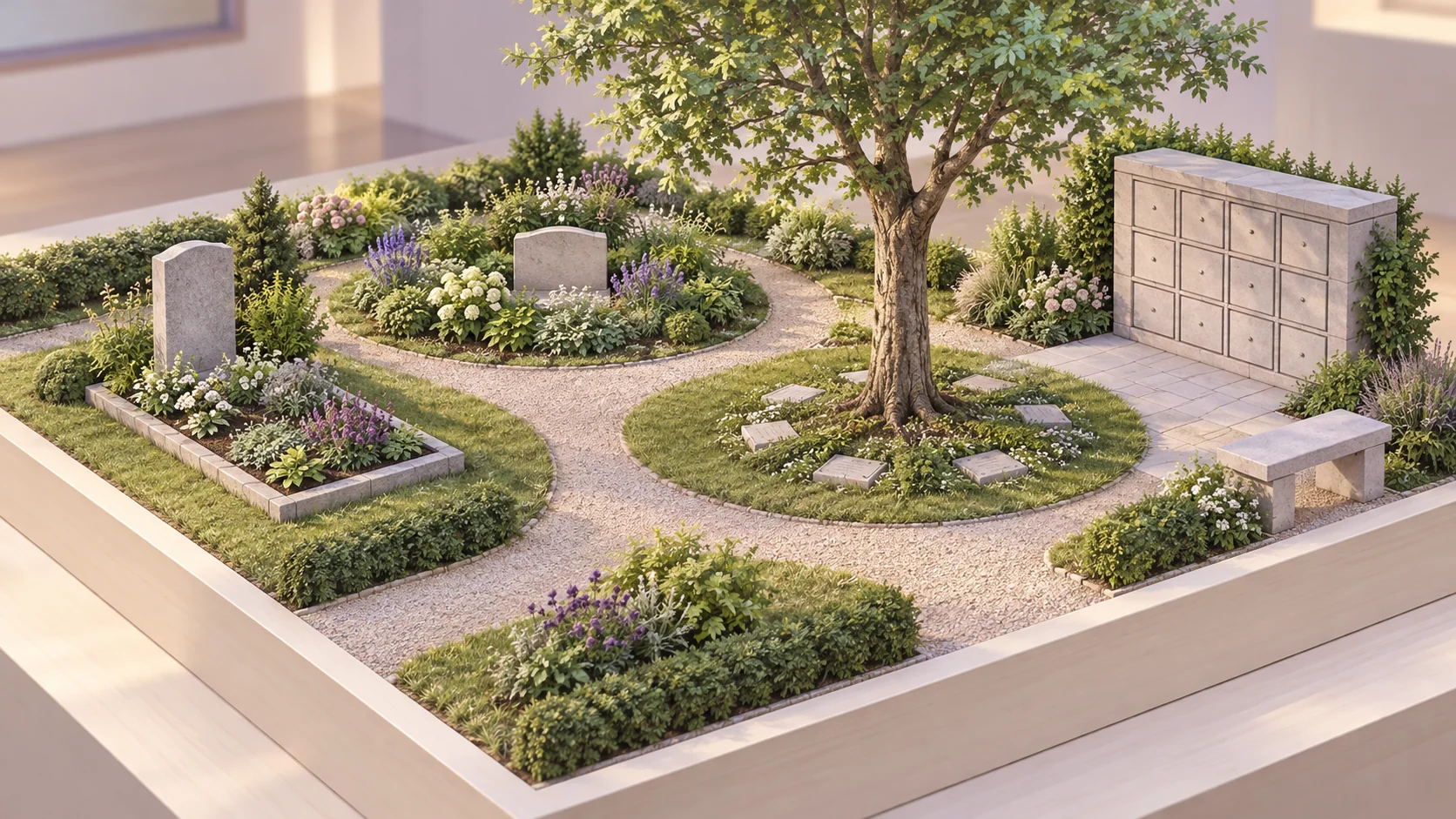
A grave type describes several layers
We separate the spatial form, burial method, allocation of a plot and design of remembrance. An urn grave may also be a selectable plot within a shared garden. These terms describe different layers of the same place.
Earlier forms: mounds and chambers
The atlas chapters on burial mounds, dolmens and Roman burial places explore earth monuments, built chambers and graves beside routes. They do not form a universal progression towards a better grave. Forms can coexist and acquire different meanings.
Today: allocated, selectable and family plots
Düsseldorf and Duisburg distinguish locally allocated row graves and selectable plots. Allocation, additional burials and renewal vary with the offer. Family graves bring several burials together. Specific conditions should be read in each cemetery authority’s own description.
Urns in earth, gardens or columbaria
Ohlsdorf documents individual and family plots, shared landscaped grounds, tree-related plots and columbaria. A columbarium houses urns above ground. The smaller urn permits different spatial arrangements; remembrance remains a matter of design and use.
Evidence: [2]
Names, care and nature are separate decisions
Düsseldorf describes lawn and tree fields, shared name markers and anonymous urn graves. Shared maintenance does not necessarily remove names. Grounds that appear natural are also designed and maintained. Local descriptions explain where visits and floral tributes are possible.
Evidence: [1]
What may drive change
Our interpretation considers burial methods, family journeys, available land, religious needs, maintenance and financing together. No grave type meets every wish. Development begins by asking which needs a form supports and which remain unmet.
A question to carry with you
Which qualities matter most: proximity, maintenance, individuality or shared remembrance?
Sources & further reading
As of
Questions about this topic
Are grave type and burial method the same?
No. Coffin or urn burial describes the method; grave type also concerns location, design and use.
Is a jointly maintained grave anonymous?
Not necessarily. Shared grounds can include names and assigned memorial markers, depending on the local offer.