
Dolmens: rooms of great stones
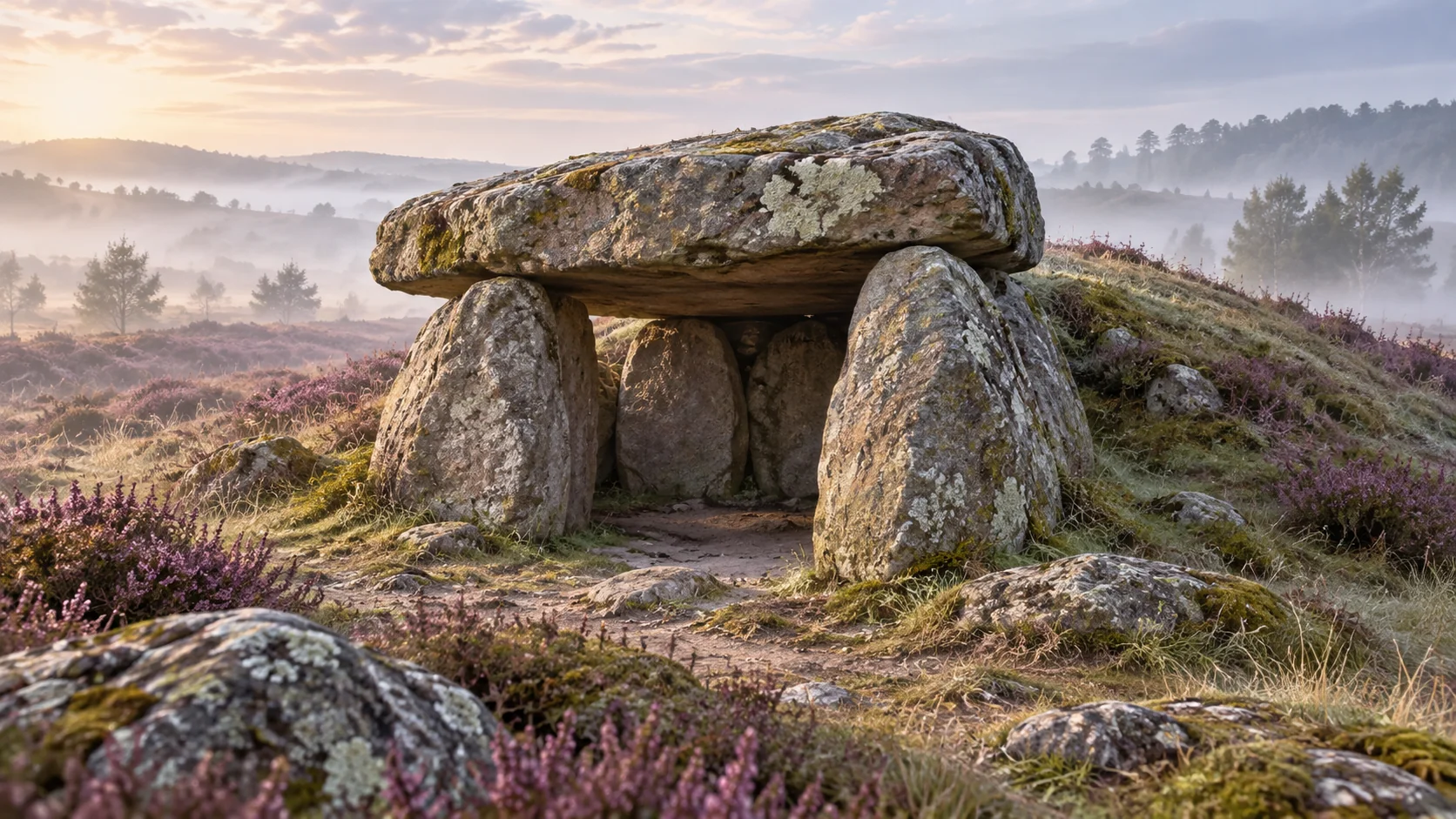
What looks like a free-standing stone table was part of a tomb. Chamber, mound and later changes together explain what survives today.
- Period
- Neolithic · megalithic graves
- Place & context
- Schleswig-Holstein and northern European comparisons.
Reading the structure
A dolmen has a chamber of upright stones and capstones. Schleswig-Holstein's archaeology authority distinguishes passage graves with an attached entrance. Both could stand within an earth mound. The visible stones cannot be equated with the complete original structure.
Evidence: [1]
A structure requires organisation
A heavy stone chamber demands more than a decision to bury someone. Material must be chosen, moved and erected. We therefore separate construction effort from later use: a lasting structure creates possibilities beyond its first occasion, without proving a particular social order.
Today's view has its own history
Removing earth or stones changes the appearance. Reconstruction can explain construction but is also a present-day decision. Viewing a monument means distinguishing original fabric, losses and additions.
From a chamber to another stone monument
Not every large-stone structure is a dolmen. Stonehenge has a different building history and several phases of use. The next comparison moves deliberately from a burial chamber to a monument whose relationship with burial and ritual changed over time.
A question to carry with you
How does an exposed monument change our view of its past?
Sources & further reading
As of
Questions about this topic
Is a dolmen a stone circle?
No. It is a type of stone burial chamber, not a circle of standing stones.
Was the chamber always exposed?
Not necessarily. Some monuments were covered by mounds; today's state may have changed.