
Burial mounds: memory becomes landscape
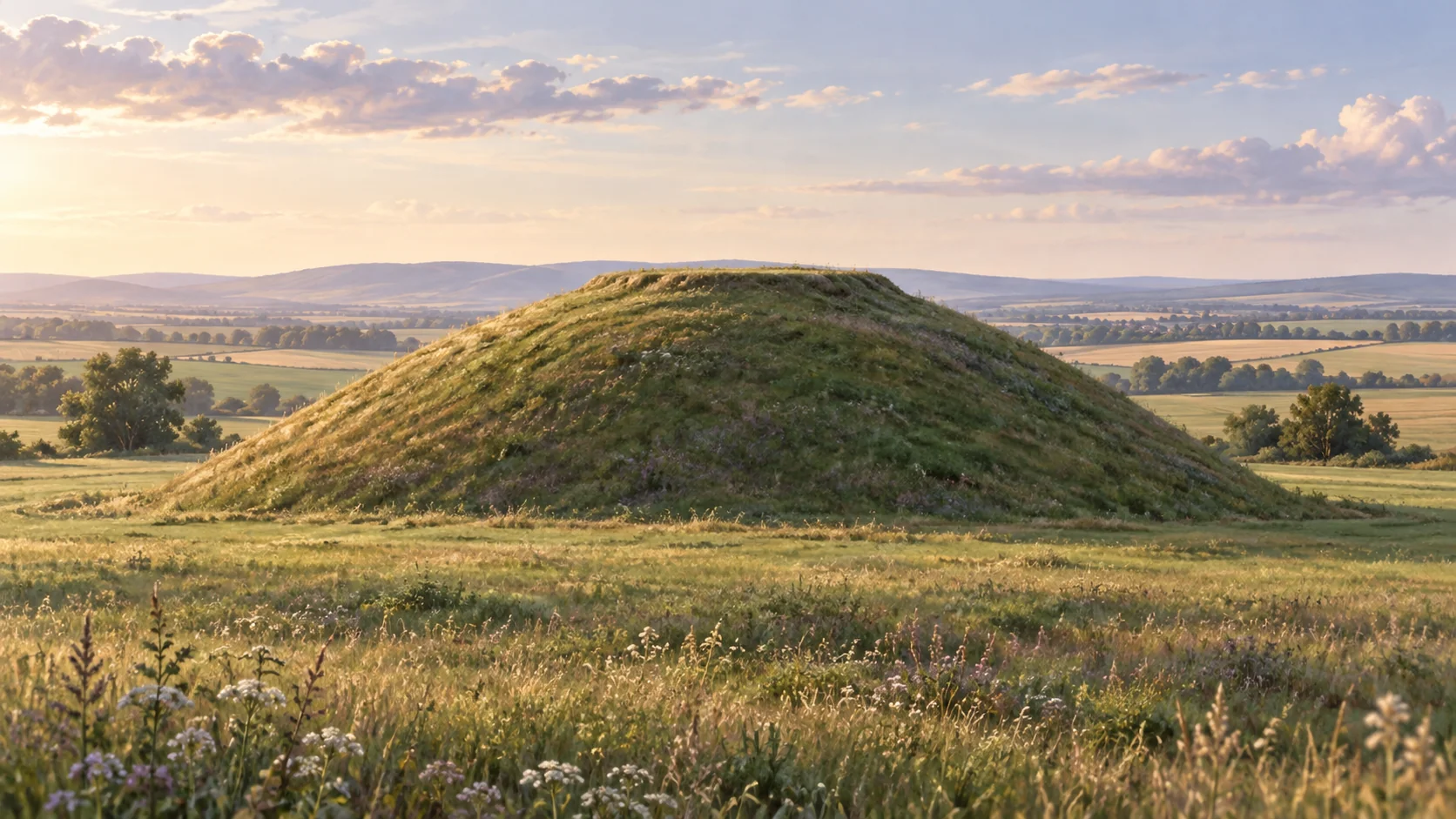
A burial mound makes an interment visible in the landscape. At Leubingen, a particularly elaborate structure also points to differences within a community.
- Period
- Bronze Age · selected evidence
- Place & context
- Central Germany and European comparisons.
Leubingen: a distinguished grave
The Halle museum places Leubingen among central Germany's elaborate burial structures around 2000 BCE. Such monuments with rich grave goods singled out individuals. They do not describe a uniform burial practice for the whole population.
Evidence: [1]
The mound speaks beyond the grave
A visible structure directs attention to a particular location. Passers-by may notice it without knowing those buried there. Monumentality connects a deposition with a public effect in the landscape.
Effort is a clue, not a complete history of power
A large structure requires material and labour. That does not establish whether people worked voluntarily or under obligation. The deceased's precise political position also needs further evidence. The term ‘princely grave’ is an interpretation, not a recorded office.
Why size and memory diverge
A mound may remain while a personal story disappears. Visibility preserves a trace, not an unchanged meaning. This connects the chapter with resources in early burial and the distant horizon of 3026: what remains materially, and what remains understandable?
A question to carry with you
What remains of meaning when only form survives?
Sources & further reading
As of
Questions about this topic
Are all burial mounds the same age?
No. Form, date and use must be determined for the specific monument.
Was everyone buried under large mounds?
No. Monumental graves do not represent all burials of their time.