
When fire changes farewell
In the Late Bronze Age, fire changes both the dead body and the farewell: cremation and interment become separate actions in separate places.
- Period
- c. 1300 BCE
- Place & context
- Central Germany; not a simultaneous change across Europe.
A documented regional change
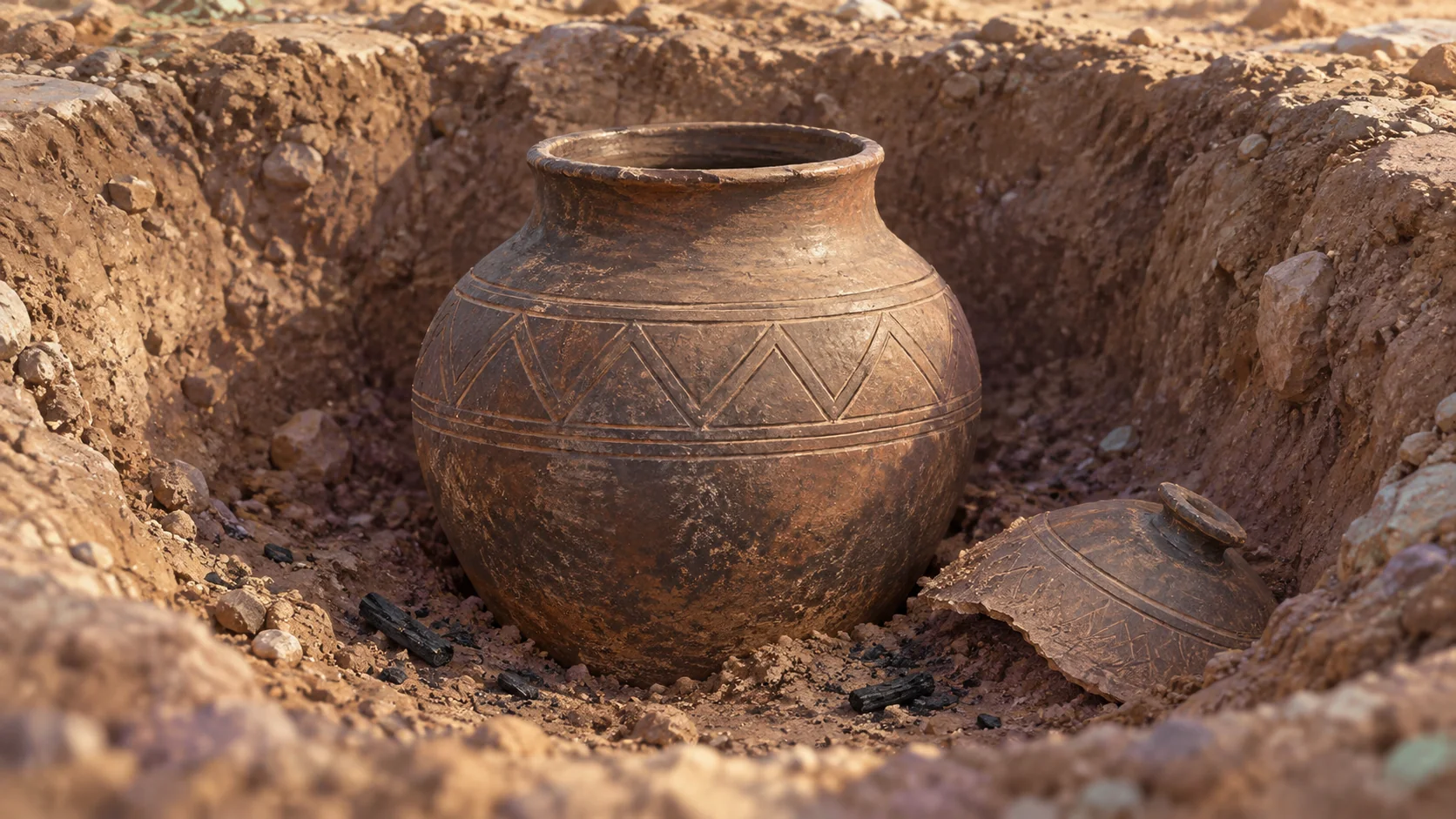
The Halle museum describes cremation from around 1300 BCE in its Late Bronze Age context, with remains usually buried in urns. This is a regional exhibition account, not a simultaneous change throughout Europe.
Evidence: [1]
The ritual acquires several steps
Cremation now stands between death and grave. The living must handle the body, organise the fire and bring the remaining material to interment. This sequence matters: an urn in the ground represents only the final part of a longer action.
What an urn can explain
The vessel's form and the position of the remains help investigate deposition. They do not independently reveal what individuals believed about death. Religious interpretations depend on specific evidence and the relevant scholarly argument.
Why Gotha tells a different story
Modern cremation is later organised differently in technical and institutional terms. Comparing it with Gotha therefore shows a recurring physical process under changed conditions. A similar form does not create an unbroken history of the same meaning.
A question to carry with you
Must the place of farewell also be the place of remembrance?
Sources & further reading
As of
Questions about this topic
Was cremation invented in the nineteenth century?
No. The central German example documents cremation long before modern crematoria.
Does a similar practice mean the same belief?
No. Similar treatment of remains does not prove identical ideas across eras.