
One form, many meanings
Body or ashes, ceremony or burial, individual grave or shared place: separating these decisions makes different forms of burial understandable.
- Period
- Body · Ashes · Memory
- Place & context
- Specific cultural and regional contexts.
What happens to the body
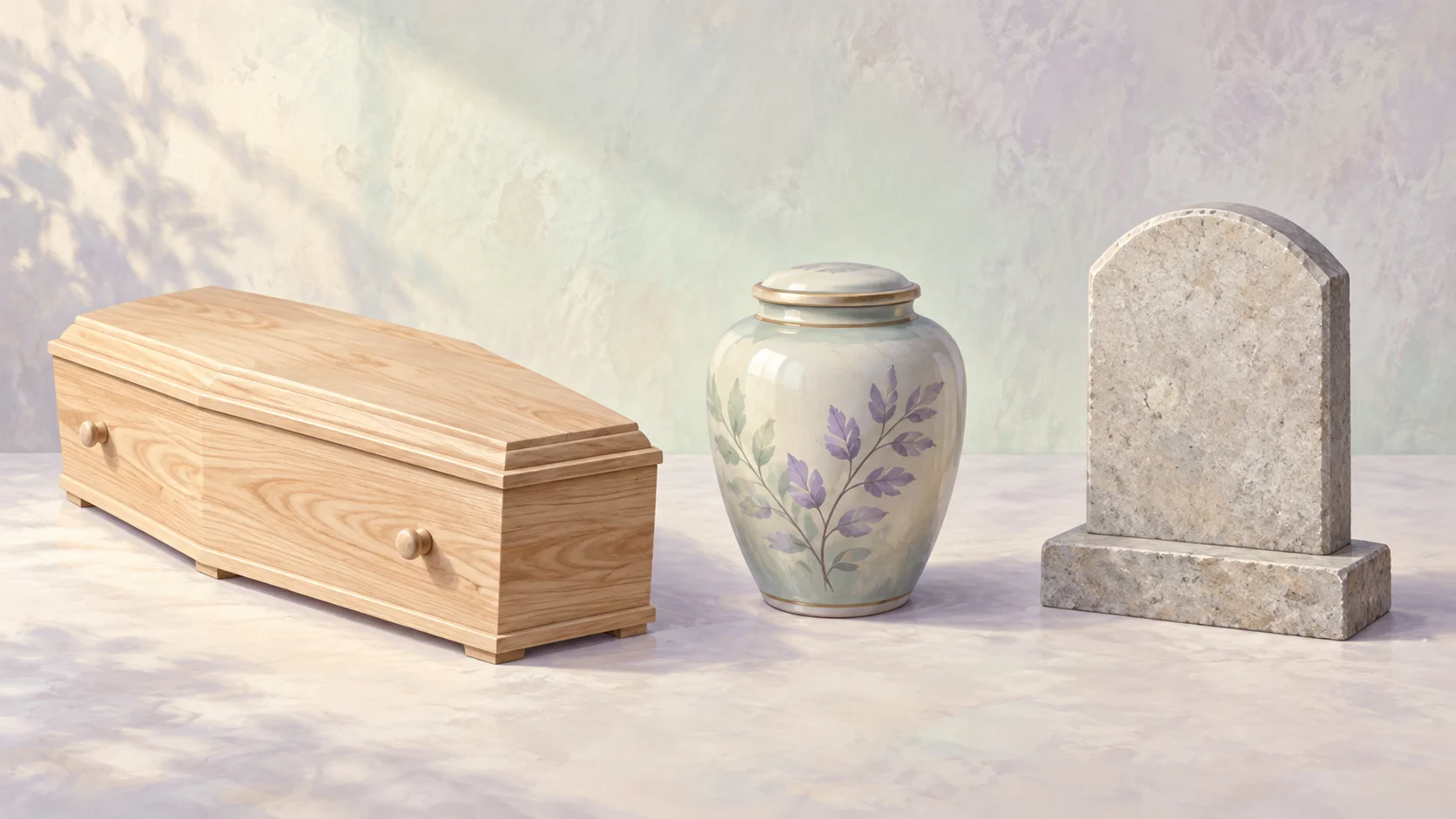
In a body burial, the deceased's body is interred; in cremation, the remains are interred after burning. This describes the physical process. It does not determine the ceremony, participants or marker through which the person will later be remembered.
Why urn, tree and sea are different categories
An urn is a container, a tree may be a reference point for a grave, and the sea is a burial setting. Listing all three as equivalent forms mixes different decisions. A clear comparison separates cremation, burial location, identification and maintenance.
The same process, a different history
Cremation is documented long before the modern crematorium. Stonehenge's early phase included cremation burials. The return of fire does not imply an unchanged tradition: technology, religious interpretation and social organisation must be explained for each period.
Evidence: [1]
What remains for the bereaved
A small urn grave may offer a clear place to visit; a communal plot may organise care jointly. Anonymous burial answers the question of a name differently from a marked grave. None of these choices replaces the question of what farewell and continuing remembrance those involved need.
A question to carry with you
What makes a farewell feel dignified to you?
Sources & further reading
As of
Questions about this topic
Is the place of interment the same as the burial form?
No. Treatment of remains and their place of interment are different aspects.
Does this page offer current legal advice?
No. It explores cultural contexts. Present-day options must be checked separately for the relevant place.