
How will we remember tomorrow?
2050 considers care and land planning, 2100 accessibility under changing climate conditions, and 3026 understandable transmission. Each horizon begins with evidence and compares explicitly conditional possibilities.
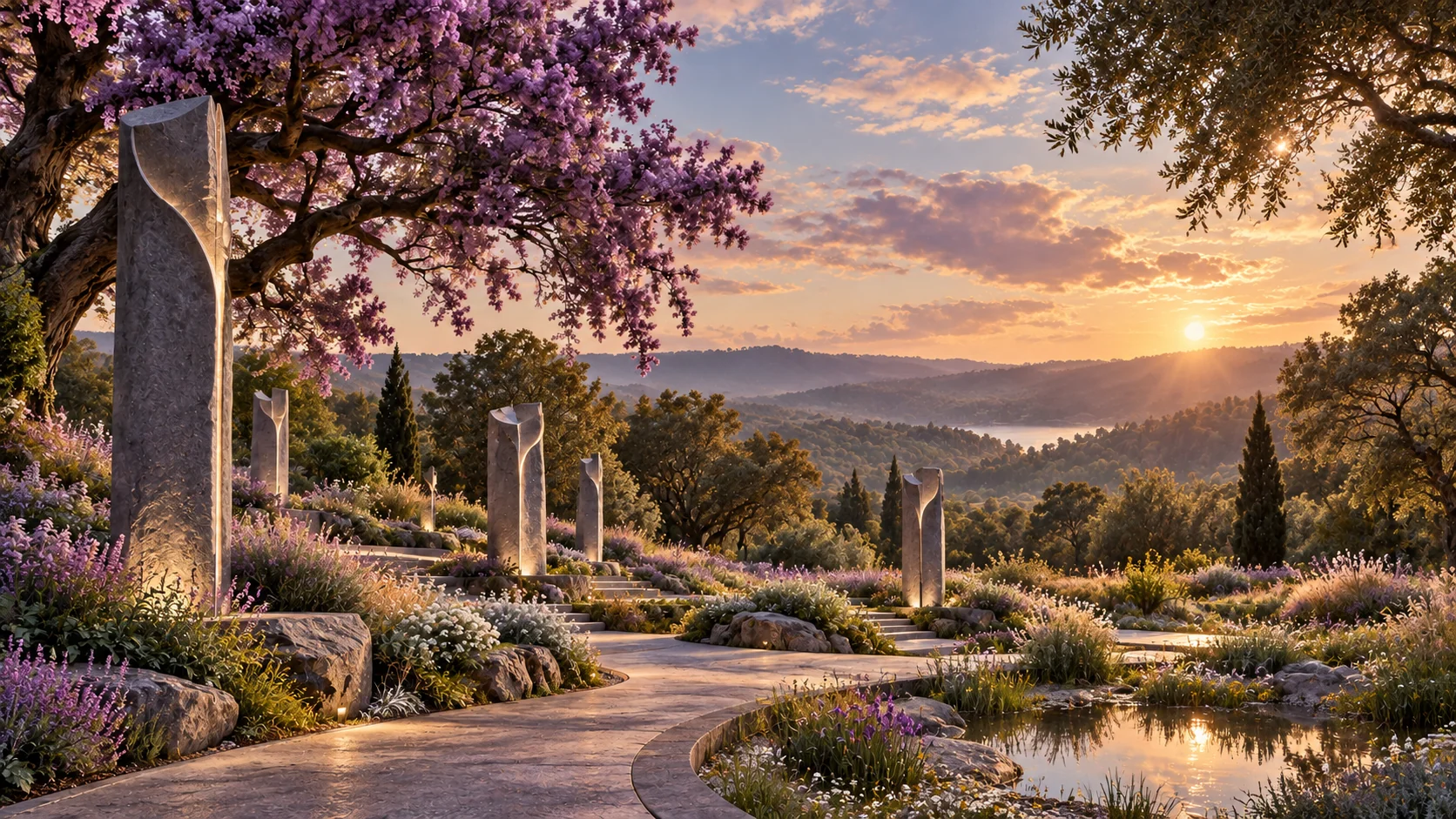
If institutions, funding and adaptation remain effective, places of memory could stay accessible.
Explore this page ↗If money, distance or local rules limit participation, differences in farewell could grow.
Explore this page ↗If war or disasters interrupt services, identification and documented burial places become especially important.
Explore this page ↗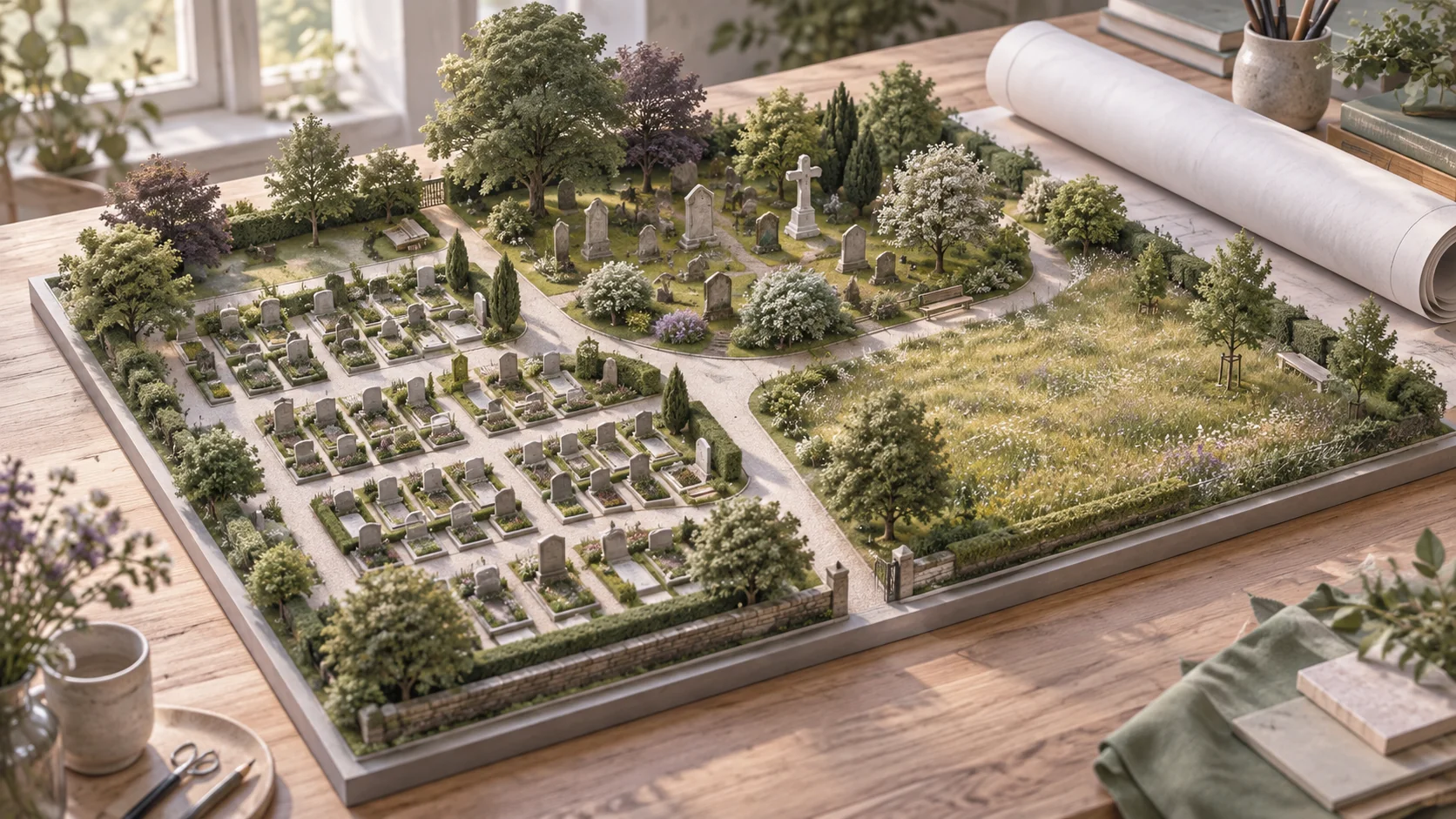
Cemeteries in transition: a horizon to 2050
Smaller burial plots do not automatically make a large cemetery easier to operate. By 2050, the central task could be planning interment, care and new uses together.
Explore this page ↗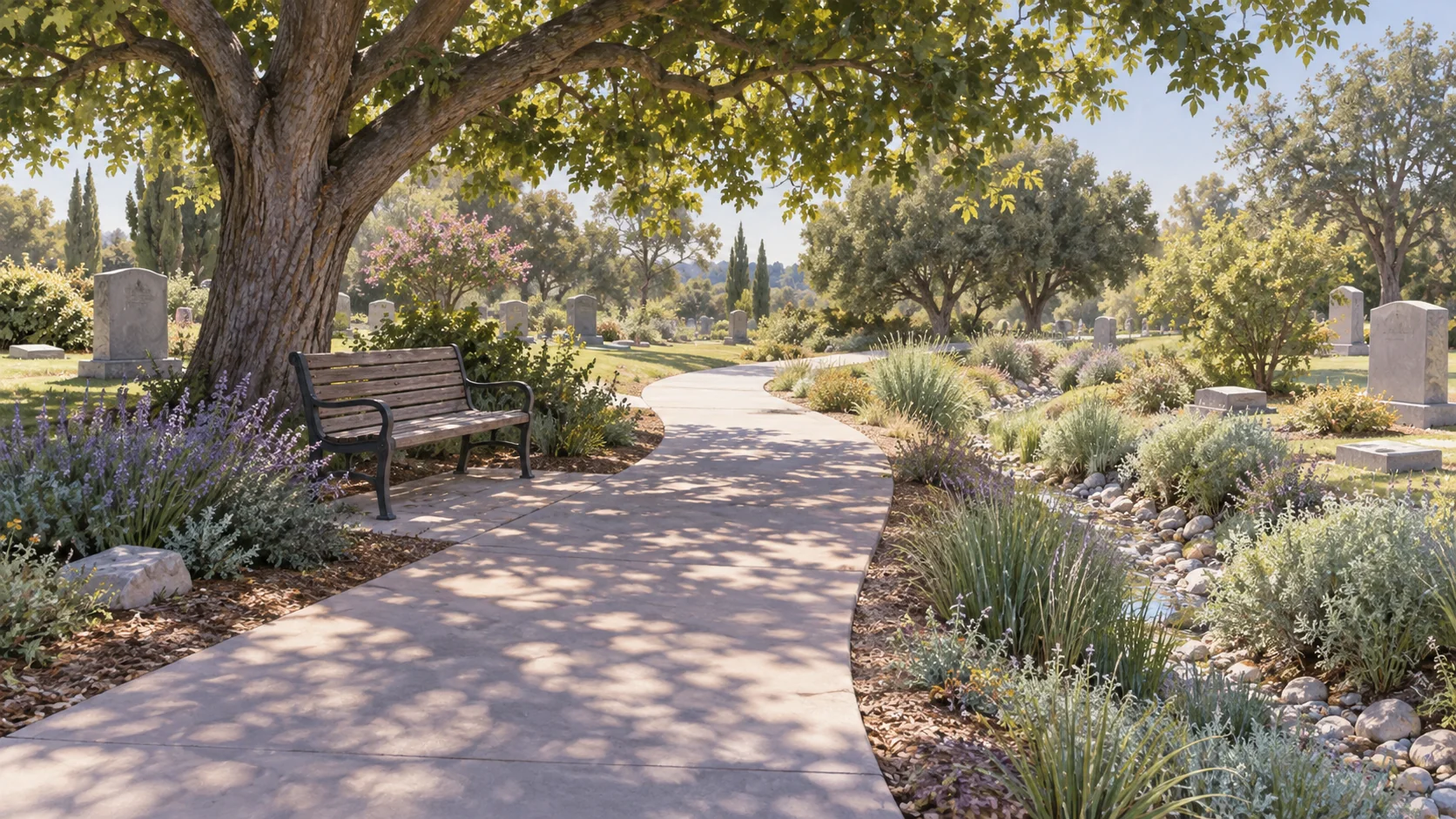
Cemeteries in a changing climate
A place of remembrance needs to remain reachable when heat, drought or heavy rain make visits harder. The 2100 horizon makes adaptation a question of participation.
Explore this page ↗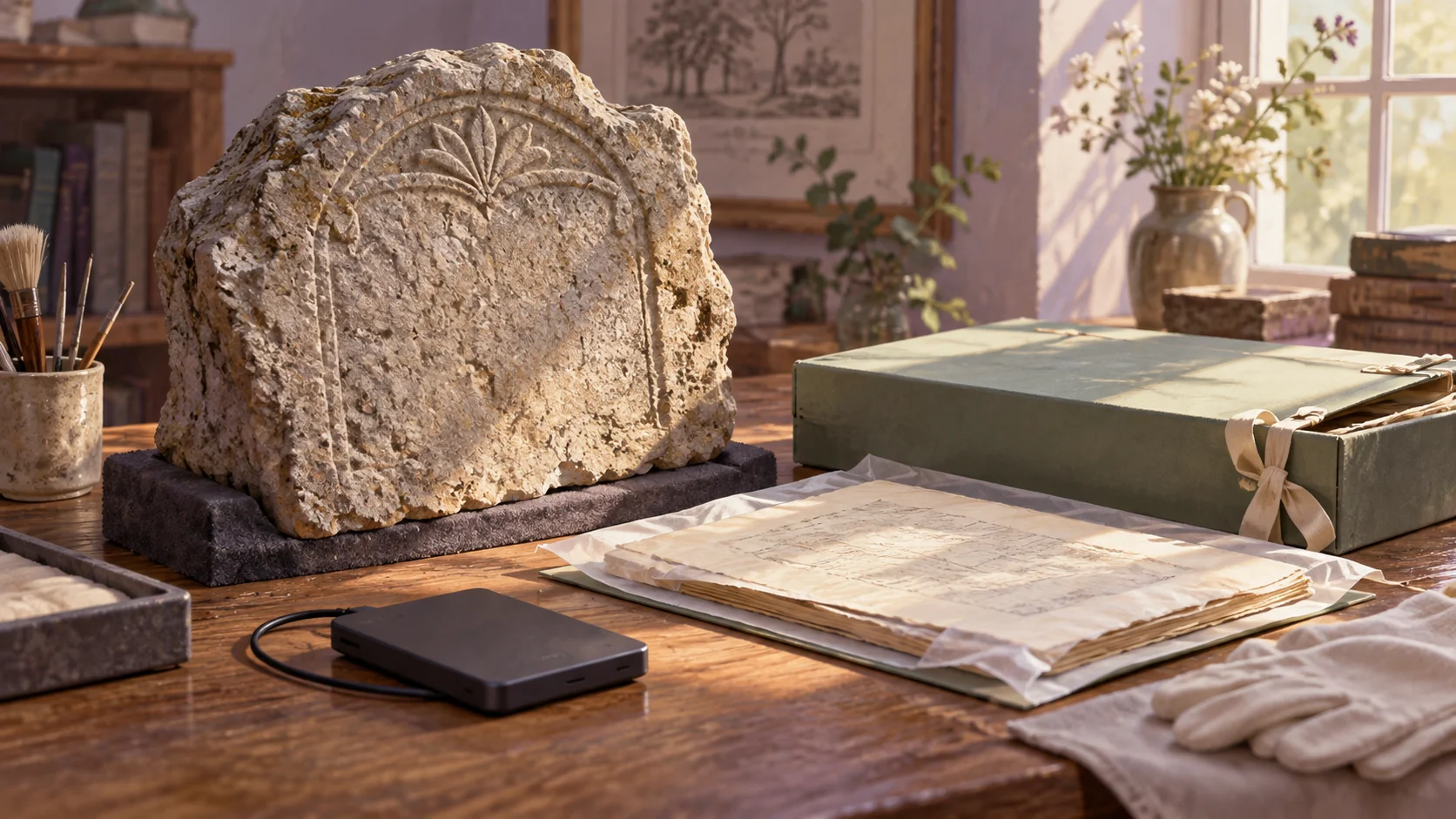
What can remain after a thousand years?
A stone may survive a thousand years while its name becomes unreadable. A copied file may remain while its context is lost. Persistence and remembrance are different things.
Explore this page ↗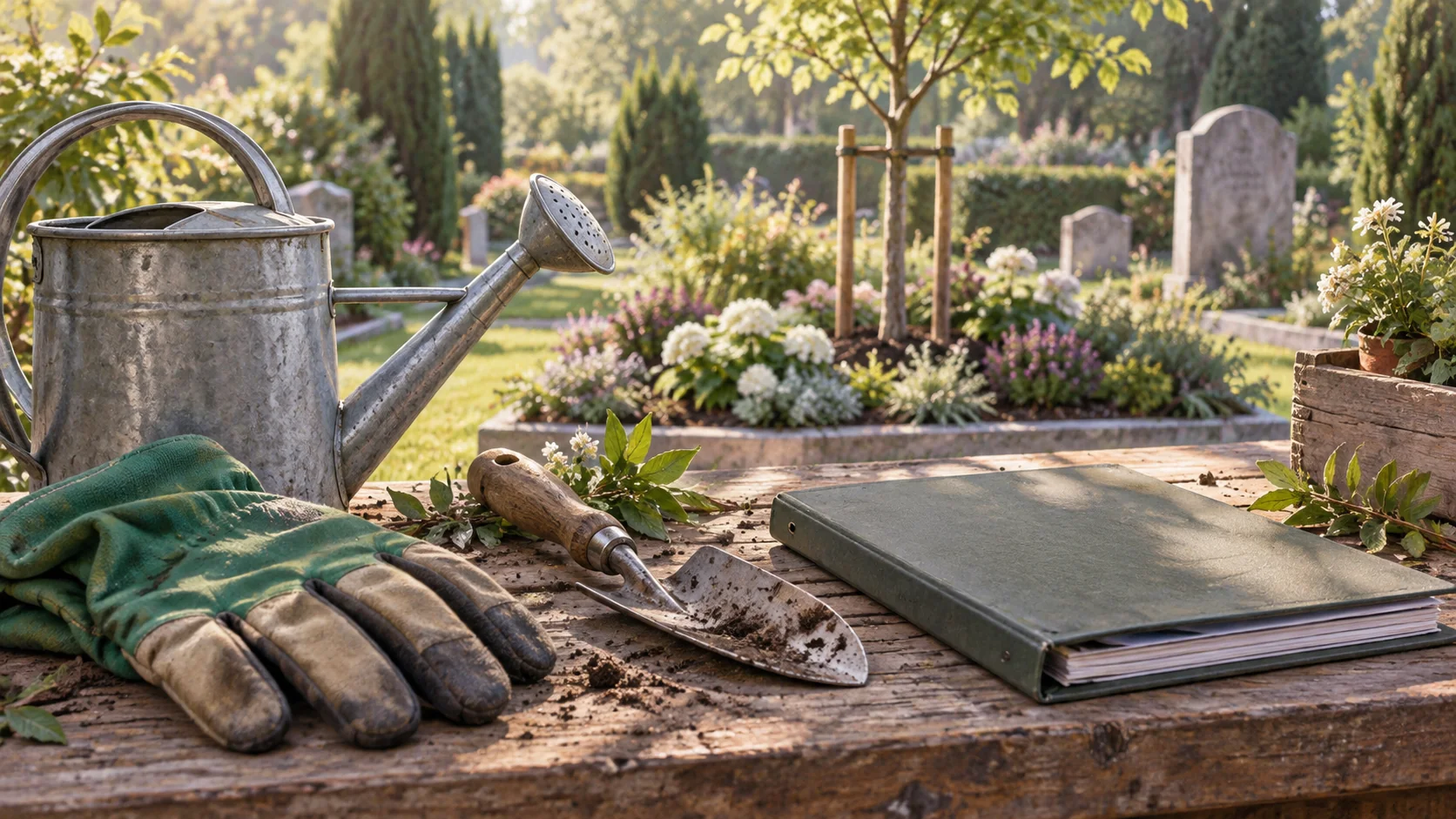
Funding tomorrow: who bears responsibility?
New grave forms do not remove funding questions. They may shift effort from relatives to communal care, or from initial interment to long-term operation.
Explore this page ↗Questions about this topic
Is 3026 a prediction?
No. This horizon is beyond robust social forecasting. The page explores conditions for transmission and remembrance.
Why consider several possible paths?
Cooperation, unequal access and crises affect the conditions of farewell differently. None is presented as inevitable.