
Rethinking grave design
How could graves connect proximity, individual remembrance and shared care? We compare design ideas with their conditions made explicit.
- Period
- Open future · not a prediction
- Place & context
- Design questions drawn from current cemetery offers; local assessment and participation remain necessary.
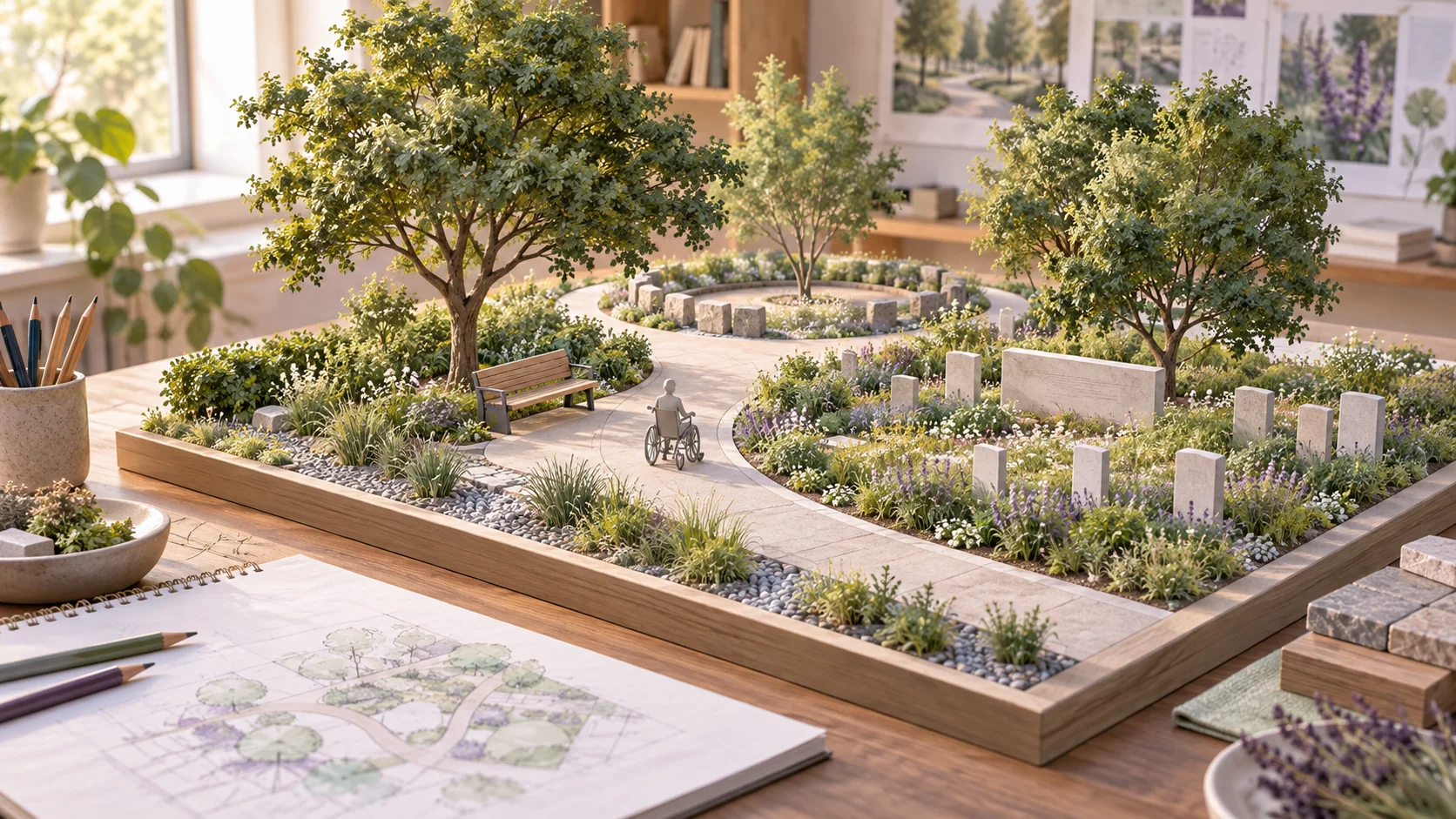
The starting point is already diverse
Ohlsdorf offers shared landscaped burial grounds and different forms of personal remembrance. The starting point is coexistence rather than one outdated grave type. We use it to develop the following original design ideas.
Evidence: [1]
Path one: shared care, personal remembrance
If maintenance were durably organised and funded, shared gardens could accommodate individual names and markers. Families might gain relief, but floral tributes, design choices and responsibility after a contract ends would need early clarification. Without these conditions, the model would remain an attractive surface.
Path two: plan the visit too
If visitors participated in planning, routes, seating, shade and accessible markers could be designed together. Short distances and understandable navigation would need examination alongside access to different ritual spaces. A natural appearance should not make a grave harder to reach.
Path three: carry existing heritage forward
Vienna’s conservation project shows why inventory matters before intervention. With agreed protection and use conditions, new burial areas could connect to existing remembrance spaces. Not every old grave would be suitable. Conservation, existing rights and mourning needs require clarification before redesign.
Evidence: [2]
How to assess a good idea
Our proposal compares options through common questions: who can reach the place, what remembrance is visible, who maintains and pays, which religious wishes fit, and what happens after use ends? Digital remembrance could supplement a place, with its care also clarified. These are assessment questions, not predicted developments.
A question to carry with you
Which three conditions would make a new grave form a worthwhile development for you?
This scenario draws questions from evidence. It does not assert a future outcome.
Sources & further reading
As of
Questions about this topic
Does this predict a new grave type?
No. It compares original design ideas under stated conditions.
Can an idea be implemented everywhere?
No. Local offers, rules, conservation needs, funding and participants’ wishes must fit together.