
Cemetery heritage: beyond old stones
A cemetery preserves objects and living practices. What do we safeguard through grave art, skilled crafts and accessible places of remembrance?
- Period
- Historic places and the present
- Place & context
- Cemetery culture in Germany; a conservation example from Vienna.
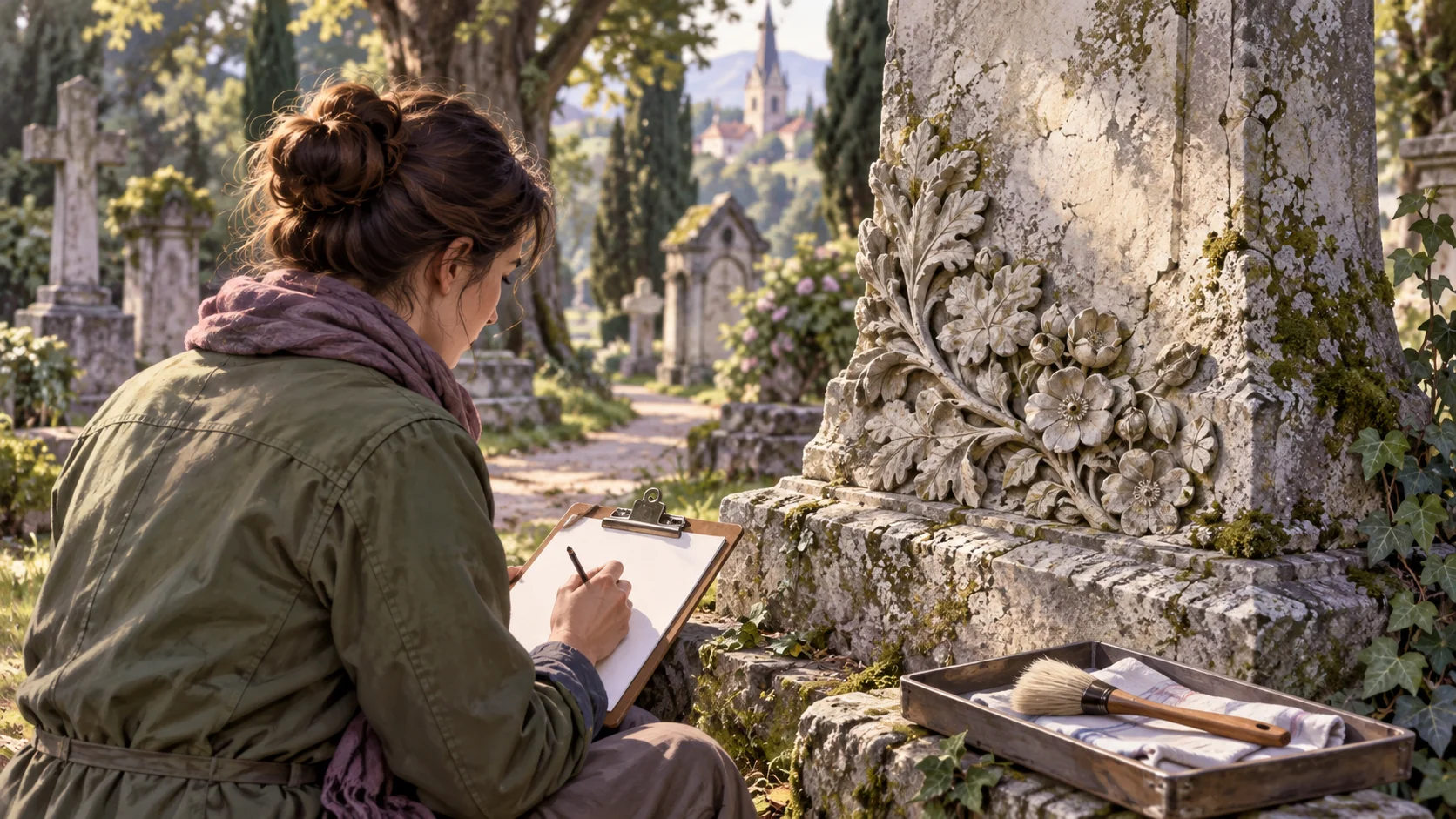
Heritage that people practise
Cemetery culture in Germany entered the national inventory of intangible cultural heritage in 2020. It includes funeral, mourning and remembrance practices and associated crafts. This does not designate every cemetery as a World Heritage site.
Evidence: [1]
Conservation starts with observation
In St Marx, Vienna commissioned an inventory of burial plots and their condition, followed by trial restorations. The example highlights documentation before conservation measures are planned.
Evidence: [2]
What a monument can tell us
Material, shape, inscriptions and location raise questions about people, work and social differences. A headstone cannot supply a complete biography. Further sources put names and symbols into a verifiable context. Missing or lost markers also belong in this inquiry.
Preserving a place while using it
Our editorial question is how a place of remembrance can remain understandable and accessible. Possible tasks include explaining its history, passing on craft knowledge and coordinating maintenance. New uses would need to respect mourners, existing graves and local conservation requirements.
A question to carry with you
What must survive for a cemetery’s history to remain understandable tomorrow?
Sources & further reading
As of
Questions about this topic
Is every cemetery a UNESCO World Heritage site?
No. The entry concerns cemetery culture in Germany’s national inventory of intangible cultural heritage, not a World Heritage designation for every site.
Are rituals part of this heritage?
Yes. Alongside objects and grounds, we consider living remembrance practices and the knowledge that supports them.