Rituals: different ways of saying farewell
Who cares for the dead, how does a community say farewell and when does remembrance return? Four bounded examples open a comparison.
- Period
- Dated examples and living traditions
- Place & context
- Jewish practice in Hamburg, Islamic rites in a Berlin planning source, Bali in 1978 and Indigenous communities in Mexico; not a global survey.
Four questions without a ranking
We distinguish care of the body, the farewell ceremony, burial and later remembrance. A country is not one uniform culture, nor a religion one unchanging practice. These examples reflect particular sources. Existing chapters on Catholic and Protestant traditions extend the comparison.
Jewish care as a communal task
Hamburg’s Israelitischer Tempelverband describes its Chewra Kadischa as a community undertaking tasks around dying, death and mourning while observing ritual requirements. The focus is organised care; this case does not represent every Jewish congregation.
Evidence: [1]
Islamic rites and burial space
Berlin’s planning study lists washing, shrouding, funeral prayer and earth burial oriented towards Mecca. It also notes differences of religious affiliation, origin and tradition. This is a local planning source, not a single worldwide instruction.
Evidence: [2]
Ngaben: one documented Balinese case
A Smithsonian film records a Balinese Hindu Ngaben ceremony in Penyaringan in May 1978, including a procession and cremation. This dated case is neither a present-day schedule nor a description of all Hindu funerals.
Evidence: [3]
Día de Muertos: remembrance after burial
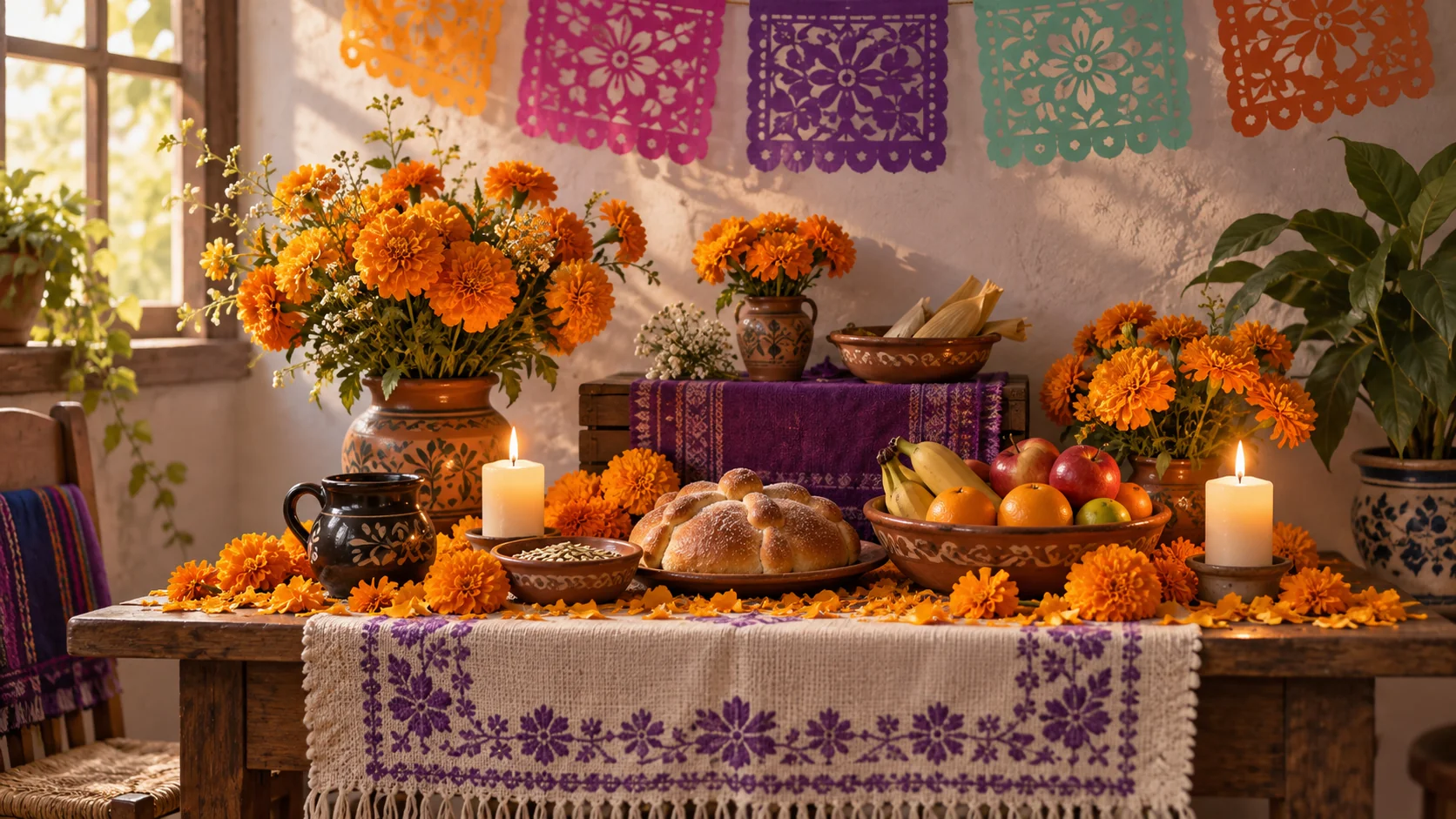
UNESCO describes recurring remembrance in Indigenous Mexican communities through flowers, candles and food offerings at home altars and graves. This concerns later remembrance, not a burial method. The chapter’s concept image illustrates this one example.
Evidence: [4]
What this comparison asks of shared places
We derive questions about spaces, participation and time: where can farewell take place, who undertakes each task, and which signs should remain? A shared cemetery could accommodate different needs if people express their own wishes and clarify local conditions together.
A question to carry with you
Which shared questions help us understand without overlooking differences?
Sources & further reading
As of
Questions about this topic
Does this chapter describe every culture?
No. It compares four bounded examples and links to other chapters. Practices vary within every tradition.
Is a festival of remembrance a burial method?
No. Recurring remembrance and burial are distinct stages that can be considered together.