
Protestant traditions: comfort for the living
Protestant burial places farewell within proclamation, resurrection hope and consolation. Its individual actions may occur in several locations.
- Period
- Since the Reformation · different regions
- Place & context
- Protestant perspective: EKD guidance from 2018.
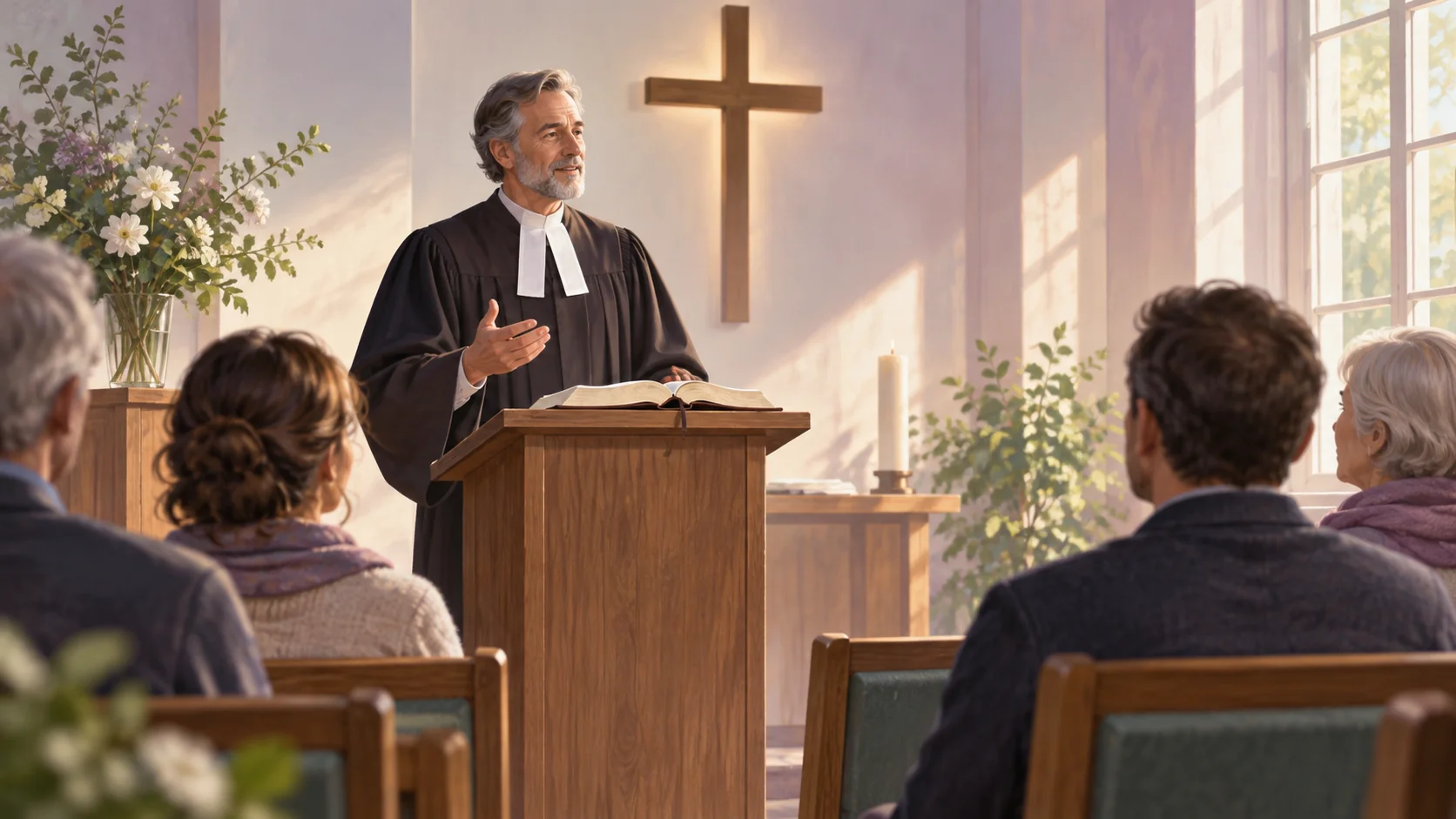
Consolation needs words and actions
A funeral service interprets death through Christian belief while supporting people facing a specific loss. Our comparison considers theological hope and practical accompaniment together. Consolation does not mean dissolving grief into one uniform explanation.
A sequence with several stages
The EKD's 2018 guidance describes blessing, accompaniment, funeral service and the act at the grave. It also describes church-supported cremation and later urn interment. A ceremony and final burial therefore need not take place on the same day.
Evidence: [1]
The form may change while the relationship remains
If farewell precedes cremation, later interment needs its own context for participants. Cultural comparison asks how separated stages remain understandable as farewell to the same person. A changed sequence does not automatically lose religious meaning.
Shared hope, different emphases
Catholic and Protestant traditions share Christian reference points without agreeing in every practice. Congregations and families may also differ. Denominational texts help explain meanings but do not replace study of local history and lived customs.
A question to carry with you
Which words do those who remain need?
Sources & further reading
As of
Questions about this topic
Does Protestant mean an unadorned cemetery?
No. Theological emphases do not translate into one universal design.
Do Catholic and Protestant traditions share foundations?
Yes, including Christian resurrection hope and care for the bereaved, alongside historical and liturgical differences.