
Catholic traditions: prayer and hope
Catholic burial connects farewell with prayer and the hope of resurrection. The grave is also understood as a place of continuing community.
- Period
- Christian tradition · Catholic perspective
- Place & context
- Catholic perspectives: German Bishops’ Conference 2004 and Vatican instruction 2016.
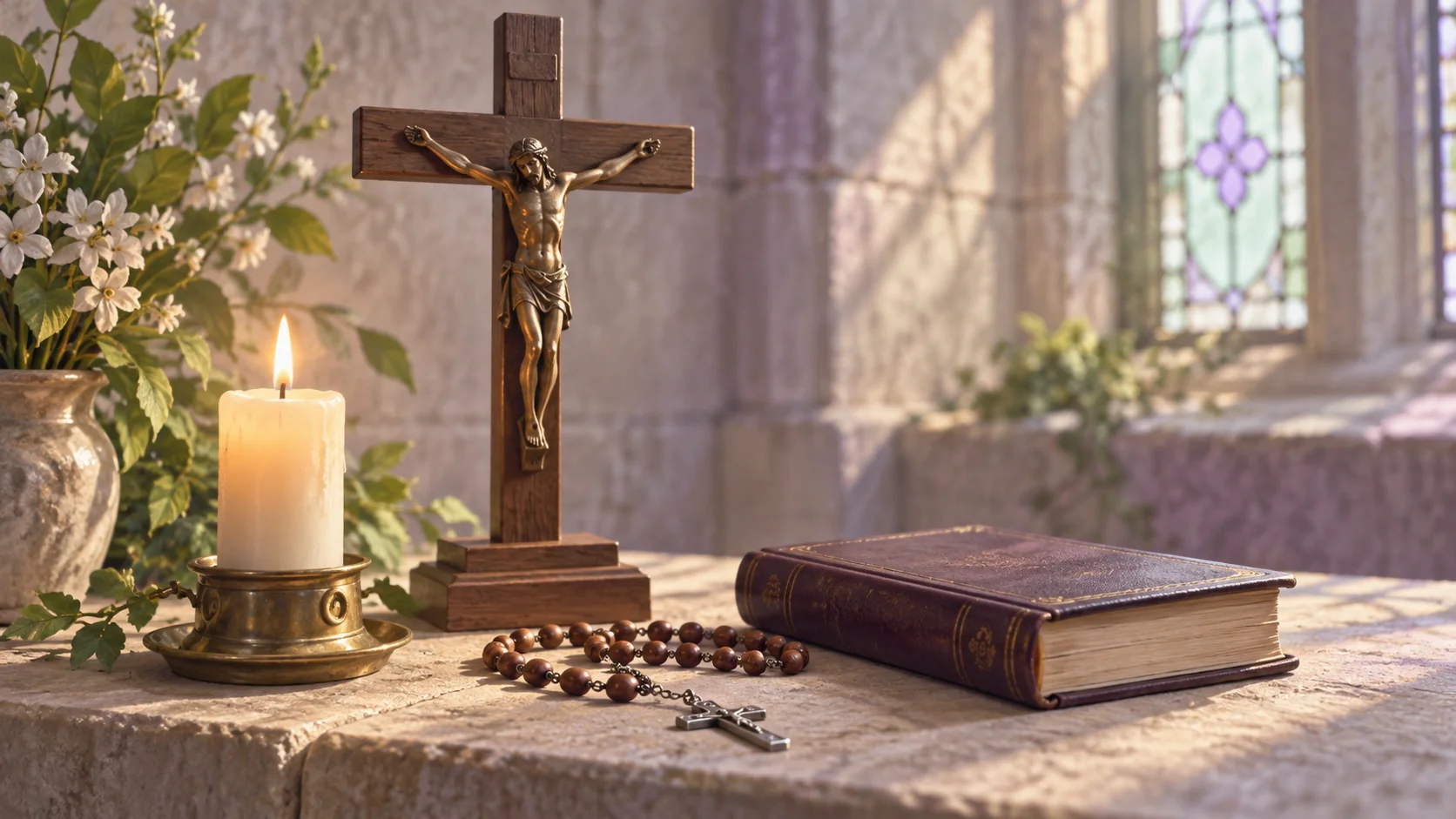
Prayer gives farewell a context
The German Bishops' Conference's guidance of 2004 connects burial with dignity, remembrance, communal prayer and resurrection hope. This is an ecclesial interpretation of death, not an archaeological or scientific claim about an afterlife.
Evidence: [1]
Body burial and cremation
The Vatican instruction of 2016 prefers burial of the body but permits cremation under certain religious conditions. It normally places ashes in a sacred location. Denomination and physical burial method cannot simply be equated.
Evidence: [2]
Why place continues to matter
A recognisable burial place can enable communal remembrance beyond one ceremony. Our cultural interpretation connects personal grief with shared practice. A cross or prayer therefore belongs within a religious context, rather than being merely decorative.
Distinguishing teaching from local life
A church text sets out a normative view. Local wishes and customs cannot be inferred from it alone. The Protestant comparison examines another theological emphasis without turning the two into rigidly separate external cemetery forms.
A question to carry with you
How can a sign be both personal and shared?
Sources & further reading
As of
Questions about this topic
Does a Catholic funeral always require burial of the body?
The 2016 Vatican instruction prefers burial of the body but allows cremation under religious conditions. It generally provides for ashes to be placed in a sacred location.
Why does the later burial location matter?
A recognisable place enables shared remembrance after the ceremony. In the Catholic perspective it connects personal grief with prayer and community.