
Closeness, community and vulnerable memory
Medieval burial places belong within religious and political orders. Erfurt shows how expulsion and destruction could interrupt remembrance.
- Period
- Middle Ages
- Place & context
- Nuremberg and Erfurt as different local examples.
Several communities, several burial places
A town is not identical to a single religious community. Christian and Jewish places need to be considered in their own contexts. Proximity to a church, a separate burial space and access to the town tell different stories of belonging.
Erfurt in 1453: a violent rupture
After the council forced the Jewish population to leave Erfurt in 1453, the Jewish cemetery was levelled and its gravestones reused as building material. Use ended through political coercion, not a neutral change in taste.
Evidence: [1]
A surviving marker can testify to a lost place
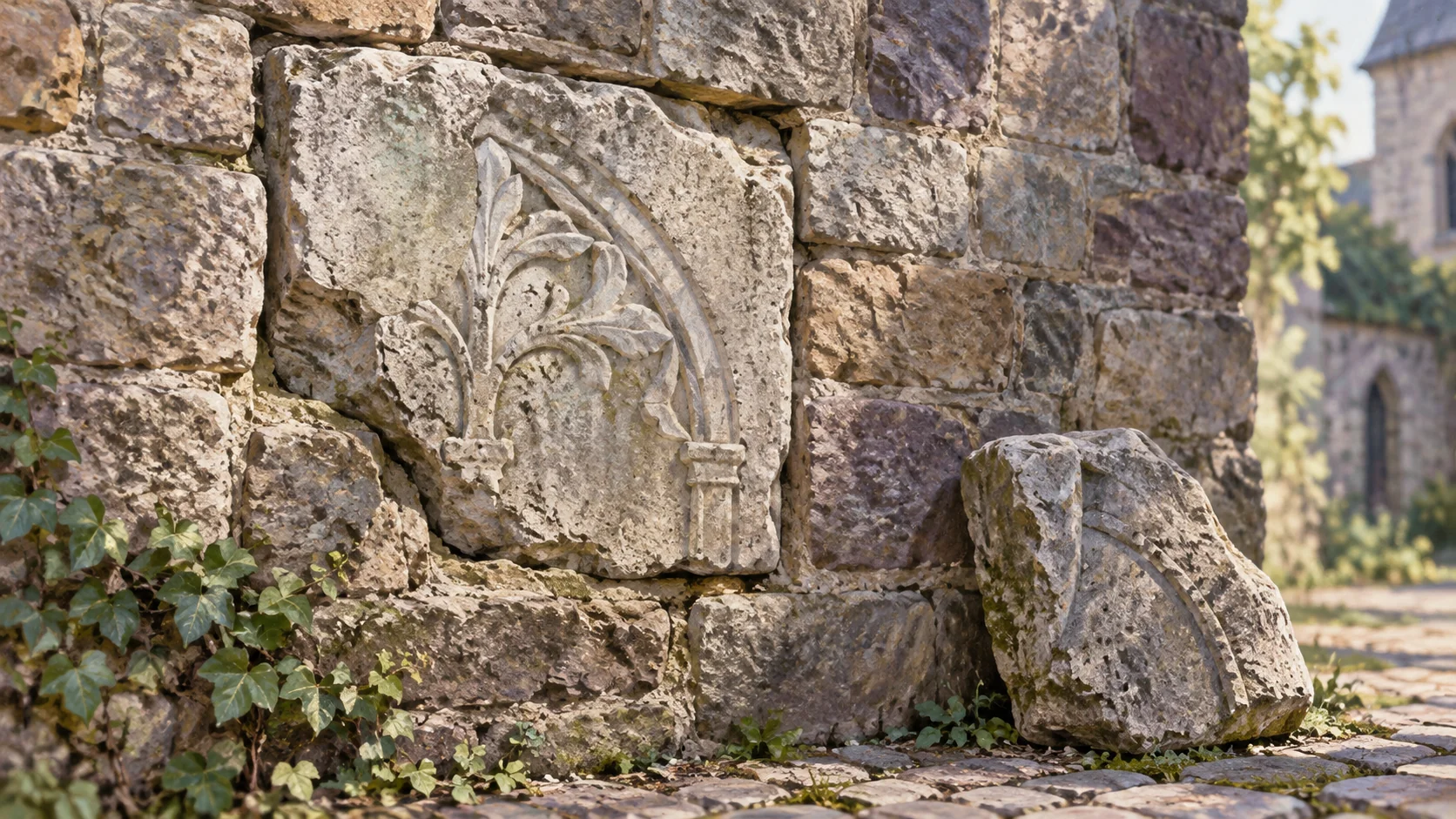
Recovered gravestones preserve some names and inscriptions although the cemetery was destroyed. Object and original context matter together. A stone displayed in a museum cannot replace an intact resting place, but can bear witness to its history.
From belonging to spatial reorganisation
The next historical chapter considers a different change: moving burials outside Nuremberg's walls. The causes must not be conflated. Religious persecution and urban epidemic policy are distinct interventions with their own consequences for the dead and the bereaved.
A question to carry with you
Who protects a memorial place when its community is gone?
Sources & further reading
As of
Questions about this topic
Were medieval burial places exclusively Christian?
No. Erfurt provides an example of a Jewish cemetery with its own local history.
Why is persecution part of cemetery history?
Exclusion and destruction affect which places and names survive.