
Remembrance beside the road
Roman graves in the Rhineland preserve clues to public remembrance. A burial find can make a name or occupation visible without explaining an entire life.
- Period
- Roman imperial period
- Place & context
- The Rhineland as a selected Roman context.
Remembrance encounters the living
A grave marker may address visitors, neighbours or passers-by as well as family. To interpret Roman burial places, we therefore consider location and visibility alongside grave goods. A grave is read as part of a used space.
A medical stamp at Elsdorf-Heppendorf
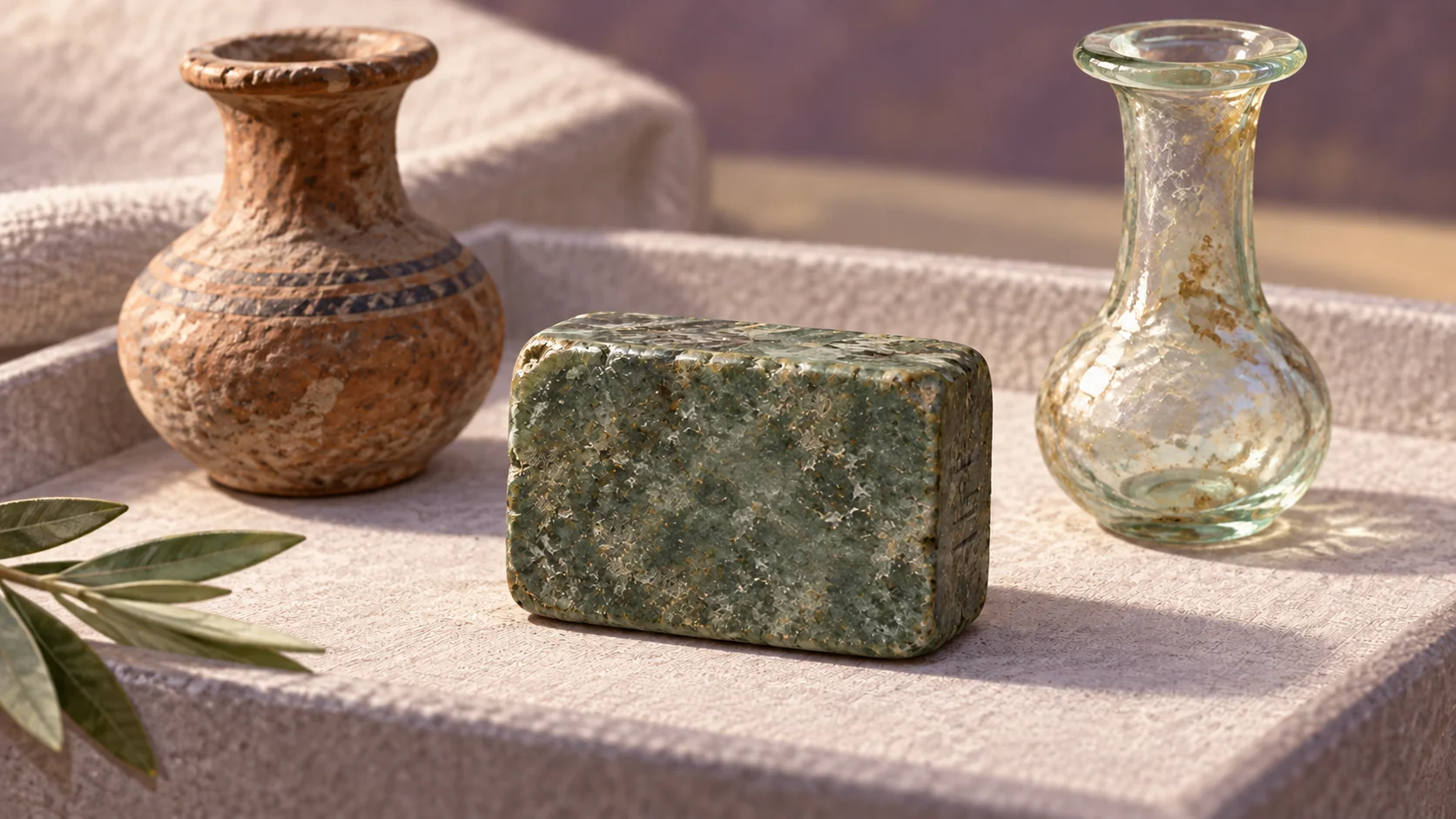
A burial containing a medical stamp was discovered in the cemetery of a Roman country estate at Elsdorf-Heppendorf. The LVR associates it with an eye doctor. One object offers a specific clue to an occupation.
Evidence: [1]
From a clue to a limited life story
The stamp points to an activity; character, family relations and personal wishes remain open. Grave goods are a selection of what was deposited at a funeral. They should not be treated as a complete surviving account of a life.
Visibility also involves selection
Any burial landscape invites comparison between elaborate remembrance and less lasting traces. The medieval chapter turns to religious belonging and protection of burial places. The shared question remains: under what conditions can a life still be recognised later?
A question to carry with you
Who is a grave marker addressing?
Sources & further reading
As of
Questions about this topic
What does the medical stamp from Elsdorf-Heppendorf show?
The LVR associates the stamp from the Roman burial with an eye doctor. It indicates an occupation rather than providing an entire life story.
Why does the find context matter?
It connects an object with a specific burial. Location, accompanying finds and scientific investigation make a reasoned interpretation possible.