
Who may be remembered?
In crises, identity, a documented grave location and relatives' access come first. Protecting these connections preserves the possibility of personal farewell.
- Period
- History and scenarios · distinguish the levels
- Place & context
- ICRC humanitarian perspective on armed conflict; the stress case is a thought experiment.
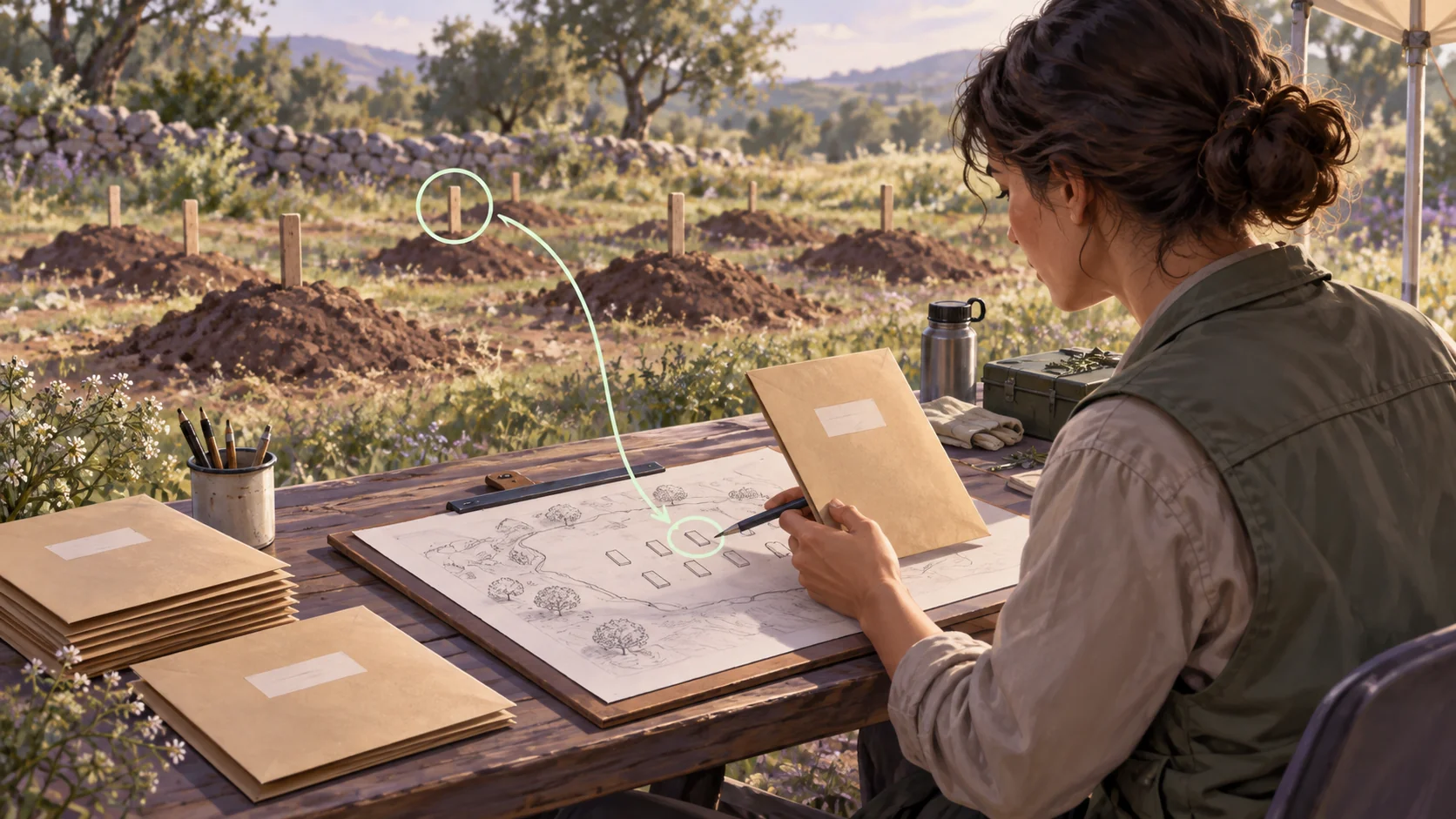
A name needs a reliable connection
A person, their remains and a burial location need a traceable relationship. If it is lost, a grave may persist while relatives cannot identify it. Identification is therefore a condition of personal remembrance as well as an administrative task.
What humanitarian work does with this
The International Committee of the Red Cross's guidance addresses human remains and information about the dead in armed conflict. Recording death is treated as a concrete task under difficult conditions.
Evidence: [1]
An explicitly imagined test case
If war interrupted routes and institutions, temporary burial places might become necessary. Information would need to remain recoverable for later identification. This thought experiment predicts no particular future crisis; it shows a task vulnerable to disruption.
Remembrance should not depend on public status
A large monument and a reliably documented name serve different purposes. Our editorial assessment values identifiable remembrance for people without public monuments too. The power question concerns whose story survives and remains accessible, as well as who is visibly honoured.
A question to carry with you
Who preserves names when an order collapses?
Sources & further reading
As of
Questions about this topic
What connection must remain intact during burial?
Identity, remains and the documented burial location must be traceably connected. This enables relatives to remember a particular person at a particular place.
What does the war scenario examine?
It examines how information might survive disrupted routes and institutions. The war is a hypothetical stress case without a predicted time or location.