
Technology changes the possibilities
Gotha opens Germany's first crematorium in 1878. The innovation is a technical setting for an entire process linking farewell, cremation and interment.
- Period
- 1878
- Place & context
- Gotha as a specific place in the German Empire.
A facility makes cremation available
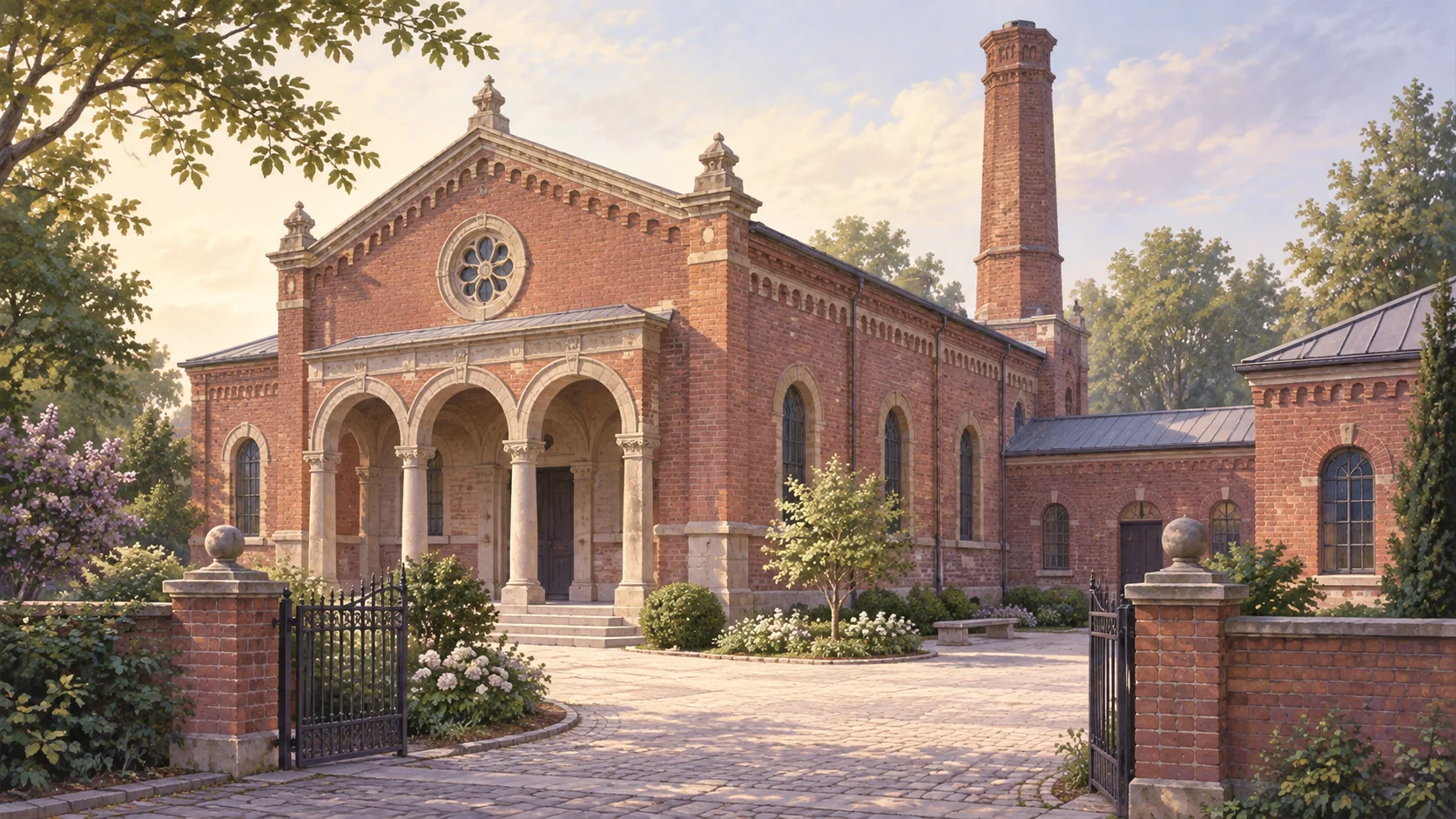
Gotha's cemetery and crematorium began operation in December 1878. The city documents it as Germany's first crematorium. Cremation becomes available as a modern service at a specifically equipped place.
Evidence: [1]
A process needs spaces and responsibilities
Technical cremation is only part of the sequence. A farewell needs a suitable space, the remains a burial place and each step reliable organisation. Cultural change also concerns how these tasks are coordinated.
An urn does not resolve remembrance
Smaller remains allow different grave designs but do not determine commemoration. An urn may be interred at a recognisable individual place or in a communal area. Technology widens choices while meaning and access still need to be negotiated.
What continues into the present
Comparison with early cremation burials separates process from interpretation. It raises a practical present-day question: which parts of a farewell do institutions undertake, and which relationships do relatives shape themselves? This connection makes technology a cultural topic.
A question to carry with you
When does a technical possibility change our ideas?
Sources & further reading
As of
Questions about this topic
What was new in Gotha in 1878?
The modern technical and organisational infrastructure of Germany’s first crematorium.
Was this the first cremation ever?
No. Archaeology documents cremation in much earlier periods.