
Stonehenge: more than a stone circle
Stonehenge initially also served cremation burials. The later stone circle belongs to a longer history of changing structures and uses.
- Period
- from c. 3000 BCE
- Place & context
- Wiltshire, Britain; a deliberate comparison beyond central Europe.
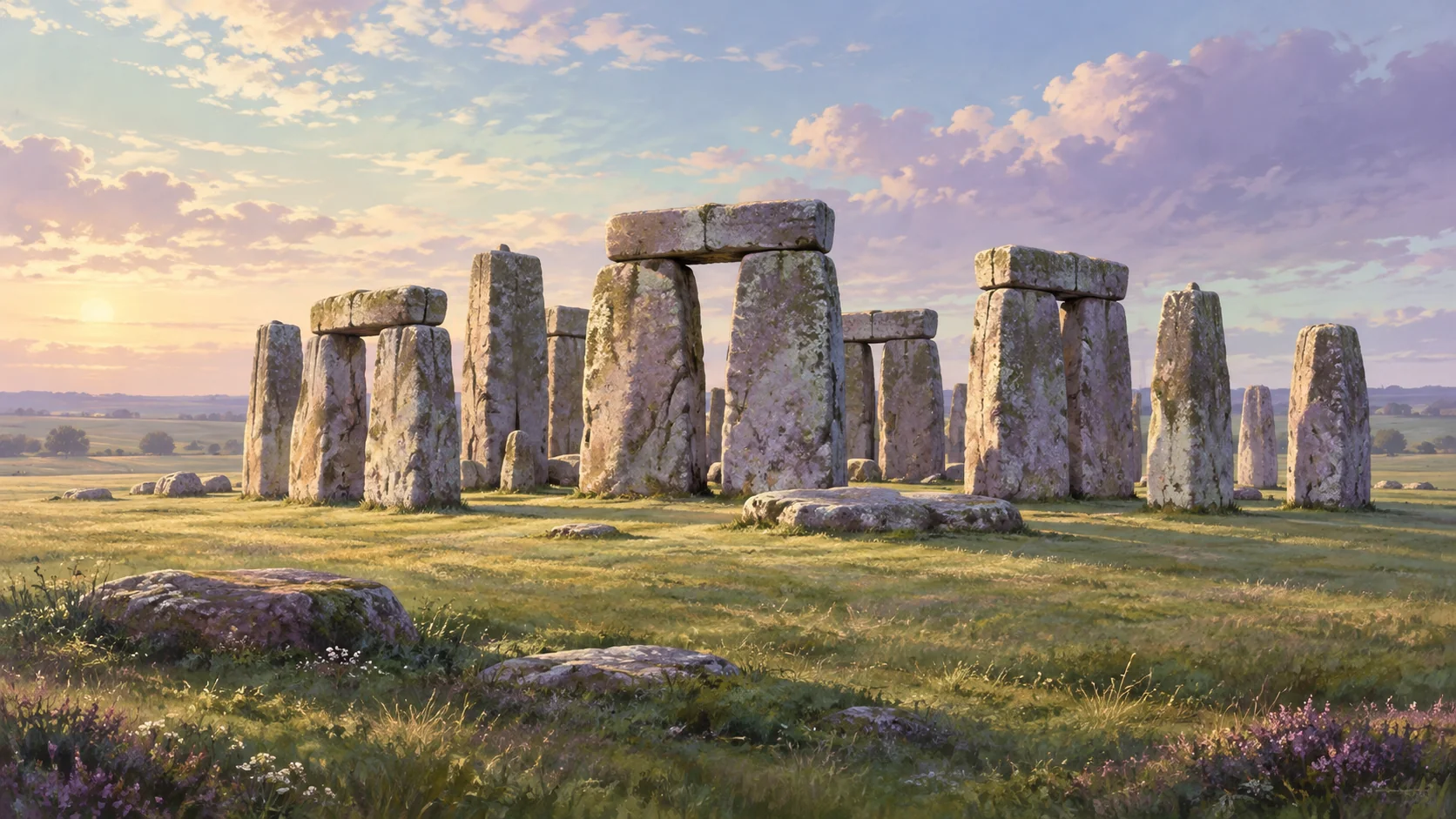
Burials precede the famous stone circle
English Heritage dates the early earthwork to about 3000 BCE and the large stone circle to about 2500 BCE. Cremation burials belong to the early phase. Today's image of the monument therefore combines different periods.
Evidence: [1]
Why sequence changes interpretation
Looking only at the standing stones can confuse their later form with the original function. Building phases and find contexts matter. A monument can be enlarged and reused without erasing the significance of earlier actions.
Burial, sky and assembly are separate questions
Solar alignment does not automatically establish who was buried or what people believed about death. Nor does a cremation burial make every later use a funerary ritual. Individual clues need to be combined without producing one apparently certain story.
What comparison with dolmens reveals
Large stones are a common material, not a common description of function. Comparison clarifies the differences between chamber, burial place and changing ritual site. Burial mounds then introduce another form that makes individual interments conspicuous in the landscape.
A question to carry with you
What do we see in a monument — and what remains unseen?
Sources & further reading
As of
Questions about this topic
Was Stonehenge exclusively a cemetery?
No. It had different phases and is also understood as a ceremonial place.
Why is this station outside the main geographical focus?
It offers an identified comparison, without assuming a single European funerary culture.