
The first traces of farewell
At Oberkassel, two people, a dog and worked objects share a burial context. The evidence records an action; its meaning still needs to be explored.
- Period
- Before writing · example c. 14,000 years ago
- Place & context
- Different archaeological sites; no single culture or present-day border.
Oberkassel: a farewell leaves traces
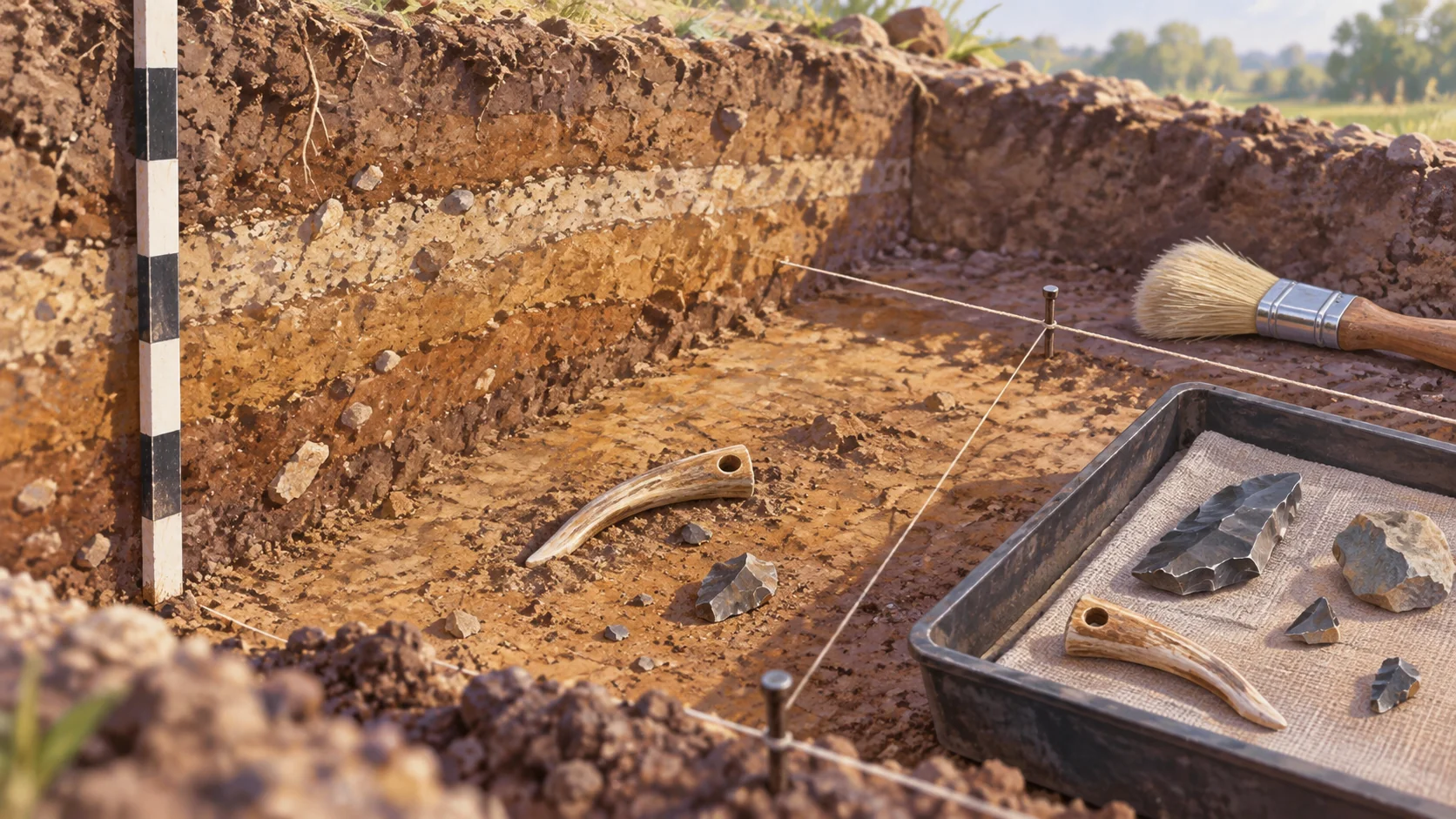
In 1914, the remains of two people, a dog and worked bone and antler objects were discovered in Bonn-Oberkassel. The assemblage, about 14,000 years old, is studied as a double burial. Our journey begins with a specific deposition, before written sources could describe a farewell.
Evidence: [1]
From bones to an action
A skeleton alone does not explain a ritual. Its context matters: position, accompanying finds and alterations to the ground. Together, these clues help researchers examine what people did with a body. Moving from that action to a religious belief requires further evidence.
A grave is not a biography
Two people buried together were not necessarily a married couple. A dog found alongside them does not establish a particular belief about an afterlife. Such stories might be vivid, but would replace the open meaning of the evidence with our own expectations. Separating observation from interpretation makes the find informative.
Why this trace opens the journey
Funerary culture becomes tangible where people respond to a death and leave something behind. The following chapters introduce lasting settlements and large burial structures. The perspective widens from one grave context to the organisation of places, labour and shared remembrance.
A question to carry with you
How might people in the distant future interpret our traces?
Sources & further reading
As of
Questions about this topic
Can early mourning rituals be reconstructed with certainty?
Only partly. Finds suggest actions; personal feelings and precise meanings often remain uncertain.
Which geographical area is considered?
Specific sites and their archaeological contexts. Modern borders do not define a single culture in the past.