
Village cemeteries: familiar names, shared care
A village cemetery keeps remembrance in a local setting. Personal attachment and lasting responsibility need to meet if it is to continue.
- Period
- Rural places · different periods
- Place & context
- Mecklenburg as a specific contemporary context.
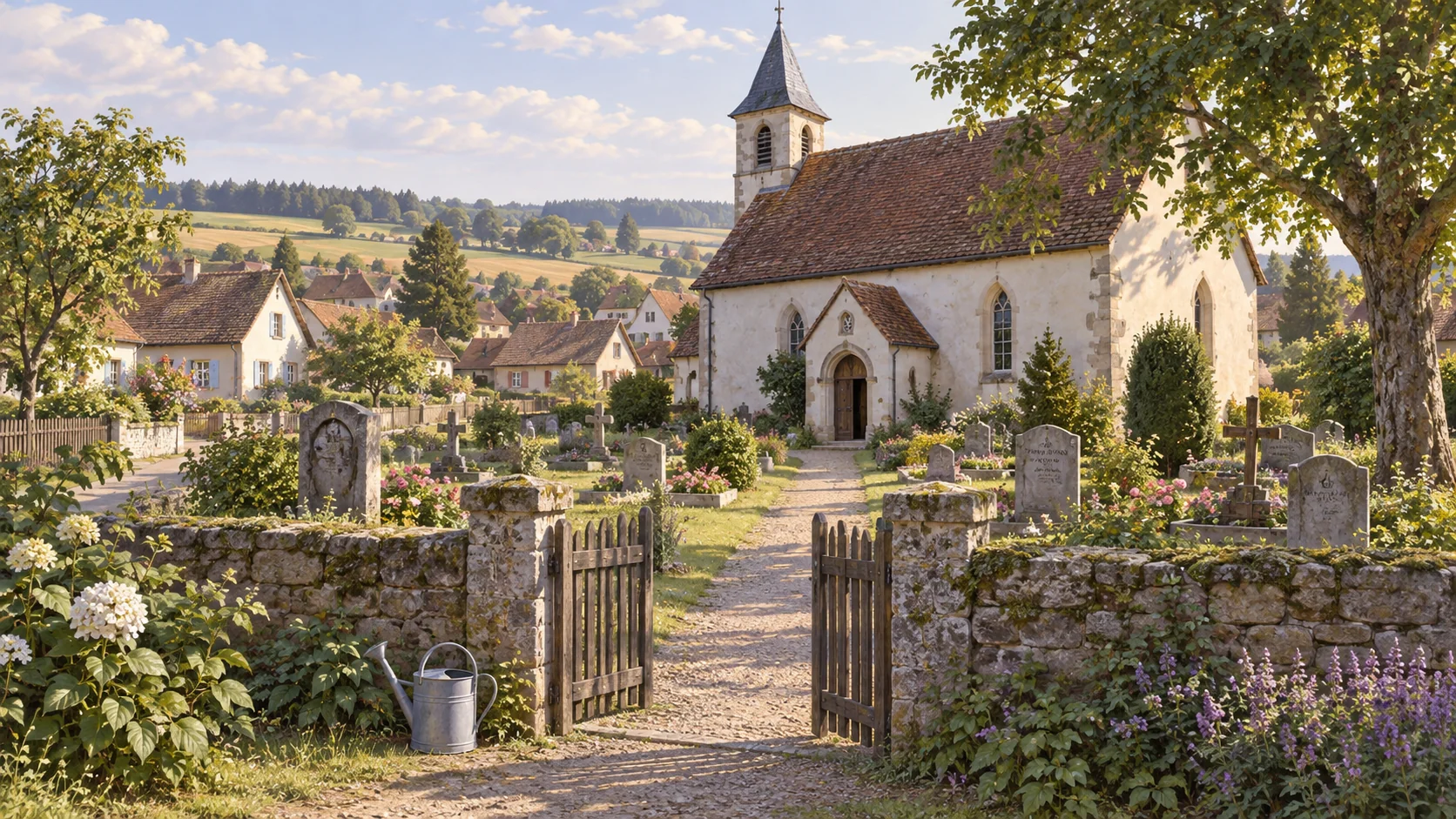
Below: commitment to a particular place
A 2020 Kirche MV report describes how an association founded in 2018 sought to preserve Below's small cemetery. It is an example of local commitment, not a current survey of all village cemeteries.
Evidence: [1]
Why local closeness may matter
A familiar route and known names can connect family stories with a home. After someone moves away, the same place may become hard to reach. A rural setting is neither automatic comfort nor an obstacle, but a specific relationship between lives and remembrance.
Commitment needs reliable boundaries
Voluntary work can support care but requires coordination with the responsible operator. Those taking on tasks need clarity about decisions, resources and obligations. Otherwise a shared place depends too strongly on the availability of individuals.
A small place poses large future questions
If fewer people remain regularly nearby, shared care could become more important. Responsibility would need to be passed on as well as land preserved. This links the village cemetery to future funding: closeness is valuable but does not secure continued operation.
A question to carry with you
Who takes care when families move away?
Sources & further reading
As of
Questions about this topic
Is every village cemetery a churchyard?
No. Location, stewardship and historical origin must be distinguished.
Why does local engagement belong to funerary culture?
Care and preservation affect whether a memorial place remains usable for future generations.